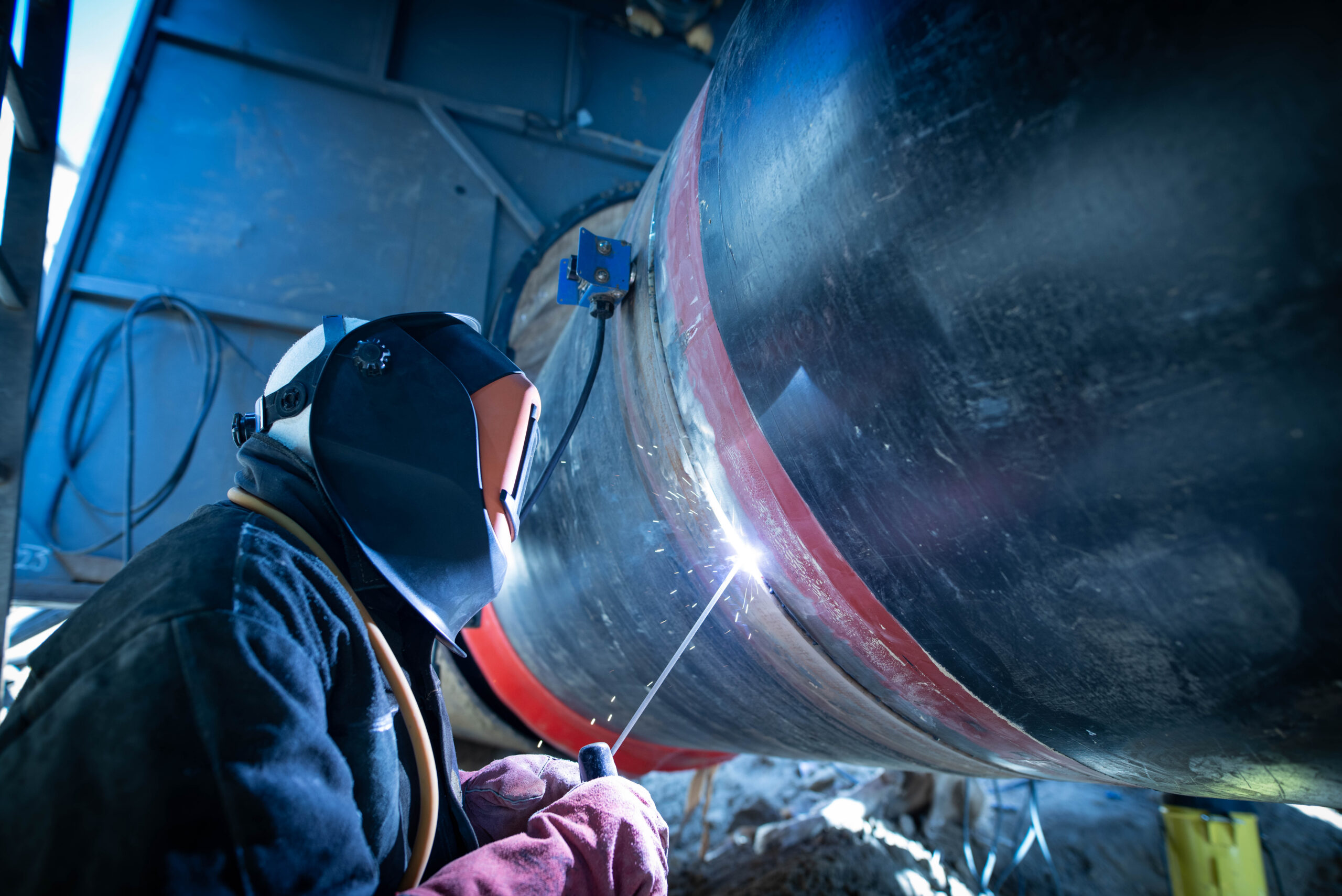
Every internally lined pipeline has the same weak point. It is not the pipe body. It is the weld joint.
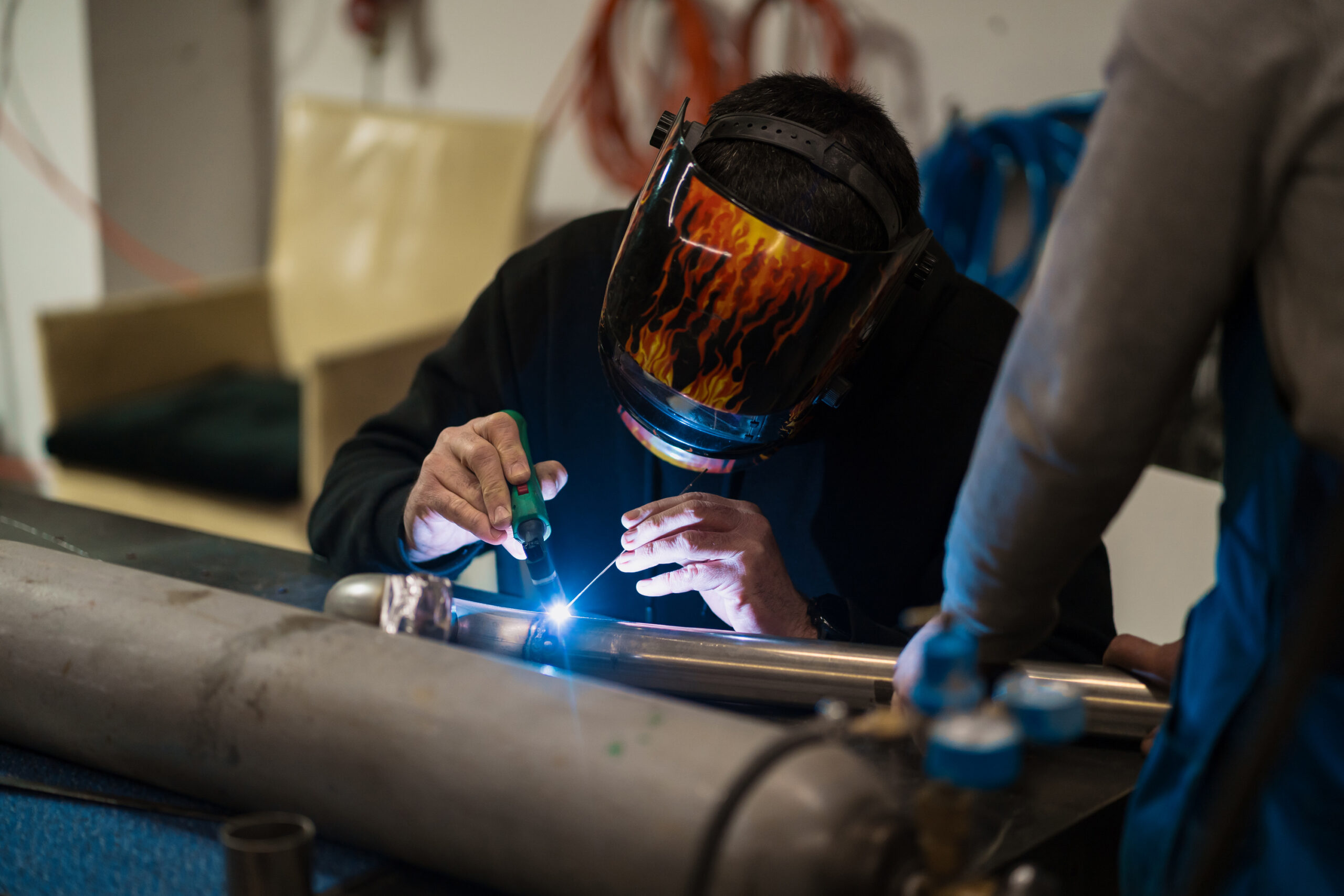
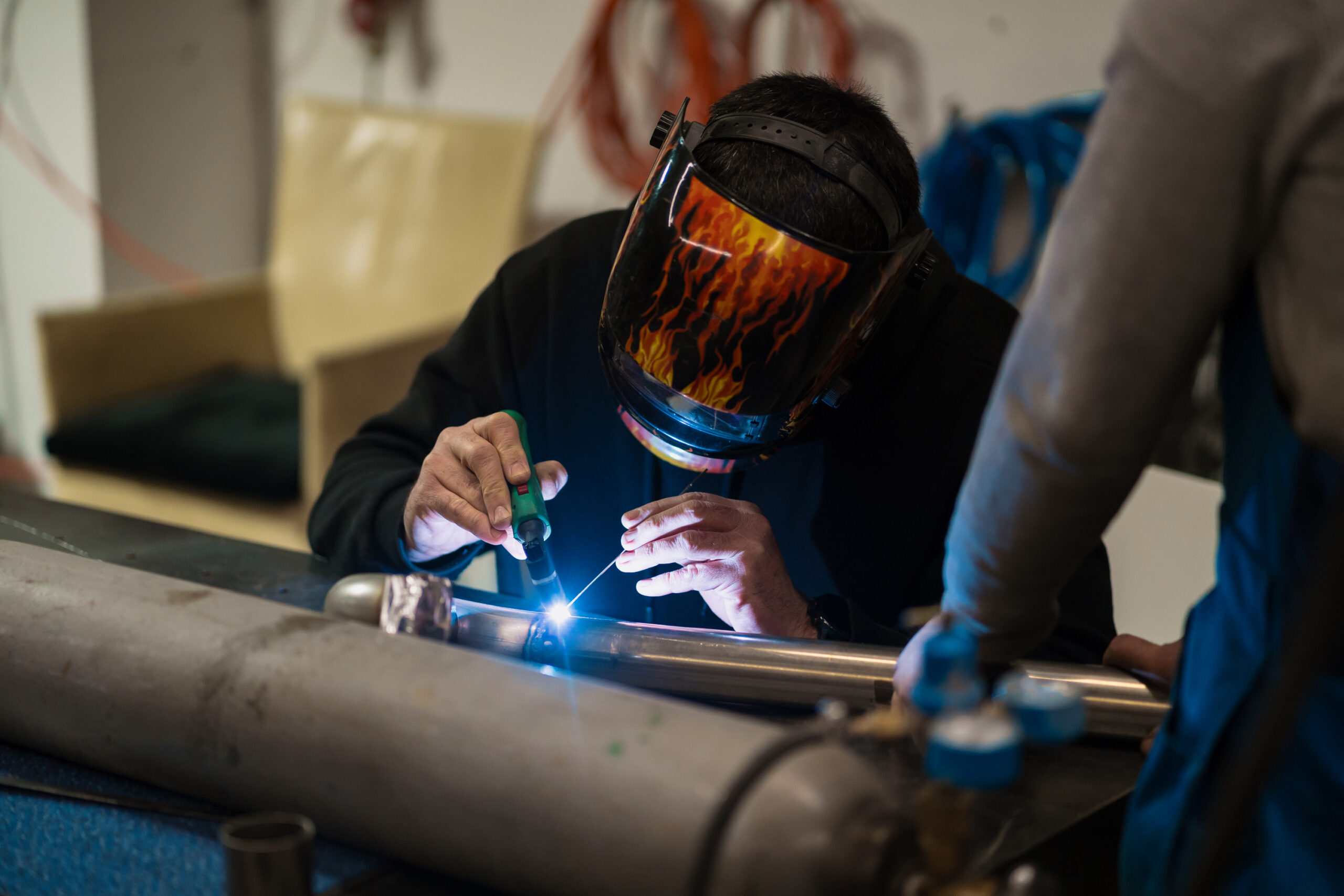
Field welding burns through the internal pipeline coating at every joint, leaving bare steel exposed to the service fluid from day one. On a long pipeline, that means hundreds of unprotected spots, each one a potential corrosion failure waiting to develop.
An internal weld sleeve fixes this. It goes in before the weld is made, covers the joint zone, and seals it against the service fluid the moment welding is complete. No waiting. No secondary operation.
This guide covers what operators need to know to specify the right system.
Why Weld Joints Are the Weak Point
The Lining Protects the Pipe. Not the Joint.
Internal pipe coatings do their job well on the pipe body. The moment a welder strikes an arc, the heat destroys the lining within the heat-affected zone on both sides of the joint. That leaves bare carbon steel sitting in the middle of an otherwise well-protected pipeline.
In aggressive environments, that bare steel degrades fast. In milder environments, it degrades more slowly. Either way, the joint is always where internal pipeline corrosion begins.
Post-Weld Coating Falls Short
The traditional fix is robotic or manual re-coating after the weld. On paper, this closes the gap. In practice, spray thickness varies, surface preparation in the field is inconsistent, and curing depends on conditions that change daily.
That is exactly why field joint coating failures remain one of the most common causes of early internal corrosion. An internal weld sleeve replaces all of those variables with a manufactured, tested component installed before the weld even begins.
How an Internal Weld Sleeve Works
Protection Goes In Before the Weld
The sleeve is inserted into the pipe end before joint assembly. When welding is complete, the sleeve already sits in position, bridging the gap between the coatings on both pipe sections and sealing the joint zone against the service fluid.
There is no spray application, no curing time, and no inspection judgment call on whether the coating meets the standard. The protection is built into a manufactured component, not applied by a technician under field pressure.
A Continuous Internal Barrier at Every Joint
Together, the internal lining on the pipe body and the sleeve at the joint create a continuous internal barrier with no bare steel exposed anywhere along the pipeline. That continuity is what turns a lined pipeline into a genuinely protected one.
For pressure-activated sleeve designs, the seal actually tightens as line pressure increases. Operating conditions reinforce the protection rather than working against it.
Simple Installation. No Extra Steps.
A well-designed sleeve does not change how a construction crew works. The full installation sequence looks like this:
- Insert the sleeve into the pipe end before joint assembly
- Verify centering and alignment
- Complete the weld using standard crew procedures
- Confirm seal activation during post-weld pressure testing
- Document the installation and move to the next joint
No specialized equipment. No waiting. For a real-world look at the sequence in action, the LPS welding demonstration for internally lined pipe shows exactly how it works on site.
Choosing the Right Internal Weld Sleeve
For ID-Coated and Thin-Lining Pipelines: FlexSleeve
Large-diameter pipelines with epoxy or thin internal coatings are the most common application for internal weld sleeve protection. The sleeve needs to bridge the uncoated weld zone, seal reliably, and install fast enough to keep pace with the welding spread.
The FlexSleeve® is built for exactly this. It is lightweight, flexible, installs without specialized equipment, and works within normal pipe bore tolerances. Its project record includes water infrastructure, brine pipelines, and oil and gas gathering systems across multiple continents.
For Upstream Line Pipe: CCB Sleeve
For upstream pipelines carrying produced fluids with chlorides, CO2, and H2S, the CCB® Sleeve is the proven choice. It brings 30 years of field performance in aggressive upstream environments and is the most widely deployed internal weld sleeve solution for upstream line pipe globally.
For a full picture of that track record, the LPS article on CCB Sleeve: 30 years of protecting pipelines covers the details.
For Rubber and Polyurethane-Lined Pipelines: SealSleeve
Rubber and PU linings serve more aggressive environments, and the sleeve must work harder. The liner wall is thicker, the bore is tighter, and the sealing requirement is more demanding.
The SealSleeve™ for rubber and PU linings uses a pressure-activated seal that tightens as line pressure increases. In high-pressure, chemically aggressive service, that behavior is a genuine long-term advantage.
For Thermoplastic-Lined Pipelines: SealSleeve TL
Thermoplastic liners are used in the most chemically demanding environments and present the most complex joint protection challenge. The liner wall is thick, the bore is tightly constrained, and chemical compatibility between sleeve and liner must be verified for the specific service fluid.
The SealSleeve™ for thermoplastic liners maintains the chemical barrier at the joint that the liner provides on the pipe body. For an overview of how thermoplastic liner systems compare and how sleeve protection applies to each, the LPS technical resources cover every configuration.
For Tie-In and Repair Welds
Repair welds and tie-in operations are among the most vulnerable points in any pipeline’s life. A repair weld without internal protection simply introduces a new unprotected bare steel zone at the exact point that was just fixed.
LPS provides internal weld sleeve solutions for tie-in welds, repair welds, and bell and spigot joints, ensuring that every joint in a pipeline system receives the same level of internal protection regardless of construction context.
What to Check Before Specifying
Before committing to an internal weld sleeve system, operators and engineers should check these three things:
- Chemical compatibility — the sleeve material, sealing elements, and bonding systems must all be verified against the actual service fluid chemistry, not generic compatibility data
- Test data at your operating conditions — confirm the sleeve has been tested at the real pressure and temperature envelope of this pipeline, not just at nominal design conditions
- Audit-ready documentation — the supplier must provide traceable material certifications and objective installation verification records at every joint
According to AMPP (Association for Materials Protection and Performance), internal corrosion management programs must be documented and defensible. A sleeve system that provides this documentation gives operators exactly that foundation.
The Long-Term Return
Operators who specify internal weld sleeve protection at construction consistently see three measurable outcomes over the asset life:
- Fewer ILI anomalies — protected joints do not accumulate corrosion anomalies, which means fewer investigations, lower intervention costs, and simpler integrity programs year over year
- Full designed service life — pipelines that protect weld joints from day one avoid the compounding corrosion damage that forces premature rehabilitation. Projects like the desalinated water pipeline in Morocco and the Corpus Christi potable water pipeline show what that looks like in practice
- A stronger compliance record — documenting protection at every joint from day one is a stronger integrity management foundation than documenting the response to failures. Compliance teams get a clear, traceable record that reactive maintenance simply cannot provide
Conclusion
The weld joint is the most critical point in any internally lined pipeline. An internal weld sleeve is the most reliable way to protect it.
By sealing the joint before the weld is made, sleeve-based systems eliminate the bare steel exposure that drives internal corrosion, reduce inspection burden across the asset life, and give operators a documented, defensible basis for joint protection that post-weld coating approaches cannot match.
Contact us to discuss the right internal weld sleeve solution for your next project.