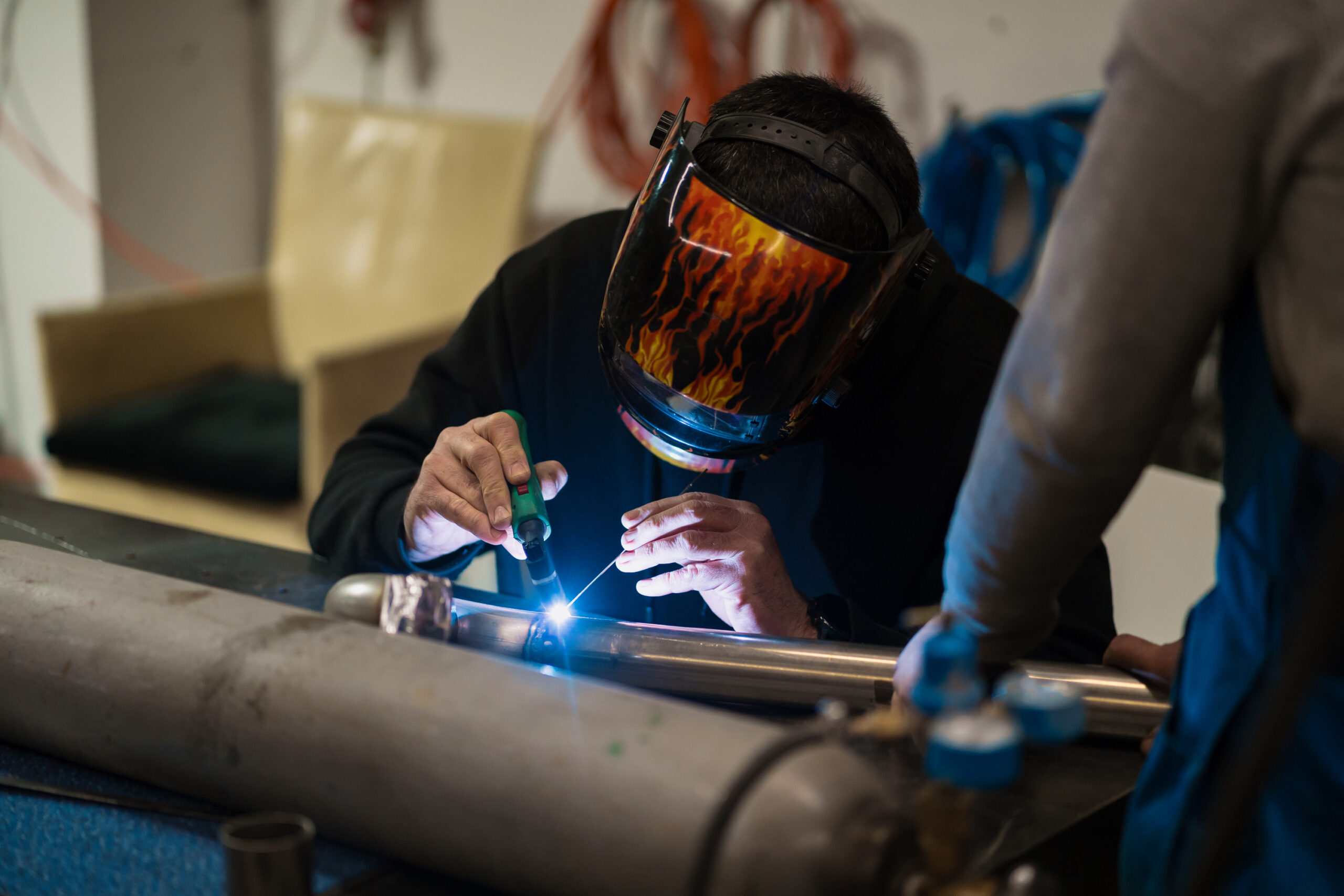
Every internally lined pipeline has one critical point that is particularly vulnerable to internal corrosion. Not in the middle of the pipe. Not at a valve or fitting. At the weld joint.
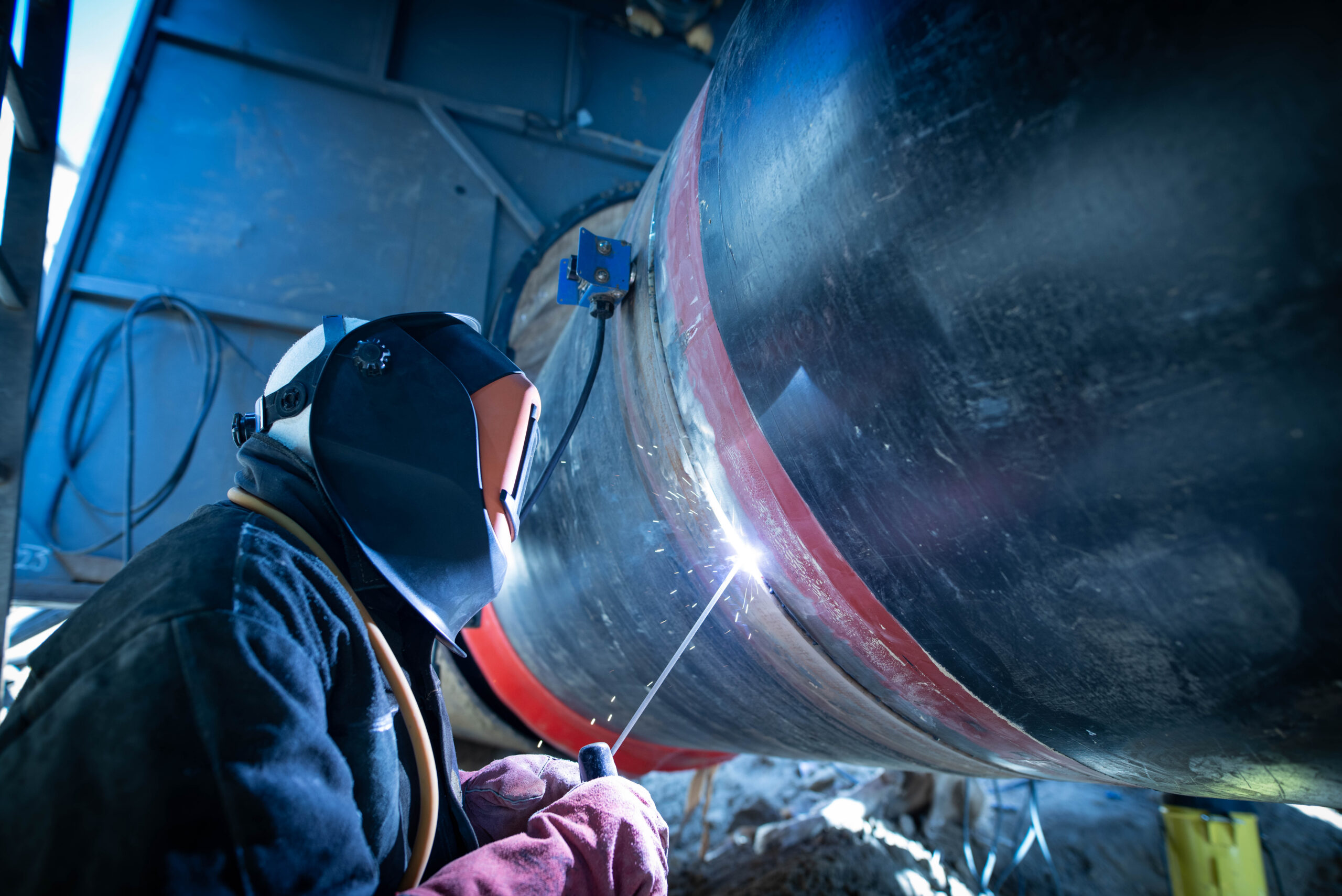
The moment a welder strikes an arc, the heat destroys the internal lining within the heat-affected zone on both sides of the joint. That leaves bare carbon steel sitting in the middle of an otherwise well-protected pipeline. Multiply that by hundreds of joints and you have hundreds of corrosion starting points built into the system from day one.
A weld sleeve insert is the solution. It goes in before the weld is made, covers the joint zone, and seals it against the service fluid permanently. This article explains how it works and why it plays a central role in long-term pipeline integrity.
Why Every Lined Pipeline Needs One
Internal Coatings Stop at the Joint
ID pipe coatings are highly effective on the pipe body. Shop-applied epoxy systems, polyurethane linings, and thermoplastic liners all perform well under controlled conditions. The problem is that none of them survive a field weld.
Arc heat burns through the lining on both sides of every joint, and the result is bare steel exposed to the service fluid from the first day of operation. In aggressive environments, that leads to rapid internal corrosion. In milder environments, it leads to slower but equally damaging degradation. Either way, the joint is always where the trouble starts.
Post-Weld Coating Is Not Reliable Enough
The traditional answer to this problem is field joint coating, applied by robot or technician after each weld. In theory, this re-protects the joint zone. In practice, it depends on spray thickness, surface cleanliness, curing conditions, and crew discipline on any given day in the field.
Those variables make the outcome inconsistent. That is precisely why field joint coating failures remain a leading cause of early internal corrosion incidents. A weld sleeve insert replaces all of that variability with a manufactured, tested component that goes in before the weld is even made.
What a Weld Sleeve Insert Actually Does
It Protects the Joint Before the Weld
The core advantage of a weld sleeve insert is timing. Rather than trying to re-coat the joint zone after welding, the sleeve is inserted into the pipe end before joint assembly. When welding is complete, the sleeve already sits in position, bridging the gap between the internal coatings on both pipe sections and sealing the joint zone against the service fluid.
There is no spray application, no curing time, and no inspector judgment call. The protection is built into the joint from the moment the weld is made.
It Creates a Continuous Barrier
A properly installed sleeve works together with the pipe lining to create a continuous internal barrier with no bare steel exposed anywhere along the pipeline. The lining covers the pipe body. The sleeve covers the joint. Together, they deliver the continuous protection that an internal coating system is supposed to provide but cannot achieve on its own at every weld.
It Seals Under Pressure
The best weld sleeve insert designs use pressure-activated sealing. As line pressure increases, the seal tightens. This means that operating conditions actively reinforce the joint protection rather than working against it, which is especially important in high-pressure service environments where joint sealing must hold for the full service life of the pipeline.
How Installation Works
A weld sleeve insert is designed to fit into the standard construction sequence without adding a separate operation or requiring specialized equipment. The process is straightforward:
- Insert the sleeve into the pipe end before joint assembly
- Verify centering and alignment
- Weld the joint using standard crew procedures
- Confirm seal activation during post-weld pressure testing
- Document and move to the next joint
The welding crew does not change their approach. No robotic coating equipment follows behind the spread. No curing windows hold up the schedule. The joint is protected the moment the weld is complete.
For a real-world demonstration of how this plays out on site, the LPS FlexSleeve insertion demonstration shows the full installation sequence in practice.
Choosing the Right Weld Sleeve Insert
Not every sleeve works for every pipeline. The right weld sleeve insert depends on the lining system, pipe diameter, service environment, and joint type. Choosing a sleeve that was designed for a different application is one of the most common reasons sleeve-based protection underperforms in the field.
For ID-Coated Pipelines: FlexSleeve
The FlexSleeve® is the most widely used weld sleeve insert for large-diameter pipelines with epoxy or thin internal coatings. It is lightweight, flexible, and installs without specialized handling equipment. Its track record spans water infrastructure, brine pipelines, and oil and gas gathering systems across multiple continents.
For a direct comparison with robotic coating on the same type of project, the LPS FlexSleeve vs robotic or manual internal joint coatings resource is worth reviewing before making a specification decision.
Upstream Line Pipe: CCB Sleeve
Pipelines carrying produced fluids with chlorides, CO2, and H2S, the CCB® Sleeve is the proven choice. It brings 30 years of documented performance in the most aggressive upstream produced fluid environments.
The CCB Sleeve for thin linings overview covers the technical specifications and how this sleeve integrates with standard upstream pipe construction.
For Rubber and PU Linings: SealSleeve
For pipelines lined with rubber or polyurethane, the SealSleeve™ uses a pressure-activated sealing system that tightens as line pressure increases. The liner wall is thicker in these applications, the bore is tighter, and the sealing requirement is more demanding. The SealSleeve is engineered specifically for these conditions.
For Thermoplastic Liners
Thermoplastic liners present the most complex weld sleeve insert challenge. The liner wall is thick, the bore is tightly constrained, and chemical compatibility between the sleeve and liner must be verified for the specific service fluid.
The SealSleeve™ for thermoplastic liners maintains the chemical barrier at the joint zone that the liner provides on the pipe body. For a full comparison of thermoplastic liner systems and how each requires a different sleeve approach, the LPS technical resources cover every configuration.
For Tie-In and Repair Welds
Repair welds and tie-in operations are among the most vulnerable points in any pipeline’s service life. A repair weld without a weld sleeve insert simply creates a new unprotected bare steel zone at the exact point that was just fixed. LPS provides sleeve solutions specifically designed for tie-in and repair contexts where standard insertion procedures may not apply.
Why It Matters for Pipeline Integrity
Fewer Anomalies, Simpler Integrity Programs
Internal corrosion at unprotected weld joints accumulates as ILI anomalies over time. Each anomaly demands investigation, fitness-for-purpose assessment, and often repair or ongoing monitoring. This drives up the cost and complexity of integrity management year after year.
Pipelines with a weld sleeve insert at every joint produce far fewer anomalies. Integrity programs become leaner, more predictable, and significantly less expensive to run over the full asset life.
Longer Asset Life
A pipeline that protects every weld joint from day one avoids the compounding corrosion damage that forces premature rehabilitation or early asset replacement. Real-world evidence of this is available in projects like the desalinated water pipeline in Morocco and the Corpus Christi potable water pipeline, both of which demonstrate how sleeve-based joint protection performs across full project life cycles.
Stronger Compliance Documentation
According to AMPP (Association for Materials Protection and Performance), internal corrosion management programs must be documented and defensible. A weld sleeve insert system with traceable material certifications and objective installation verification at every joint gives operators a clear, audit-ready compliance record that reactive maintenance approaches simply cannot provide.
Conclusion
A weld sleeve insert does one thing. It protects the most vulnerable point in an internally lined pipeline before the weld is even made. That single decision, applied at every joint, eliminates the bare steel exposure that drives the majority of internal corrosion incidents in lined pipeline systems.
The result is fewer anomalies, lower lifecycle costs, longer asset life, and a stronger platform for pipeline integrity management from day one.
Contact us to find the right weld sleeve insert for your pipeline project.