
Pipeline engineering has come a long way. The materials, pressures, diameters, and service environments that pipelines operate in today would have been considered extreme just a generation ago. And as pipelines have evolved, so have the challenges around protecting them from the inside out.
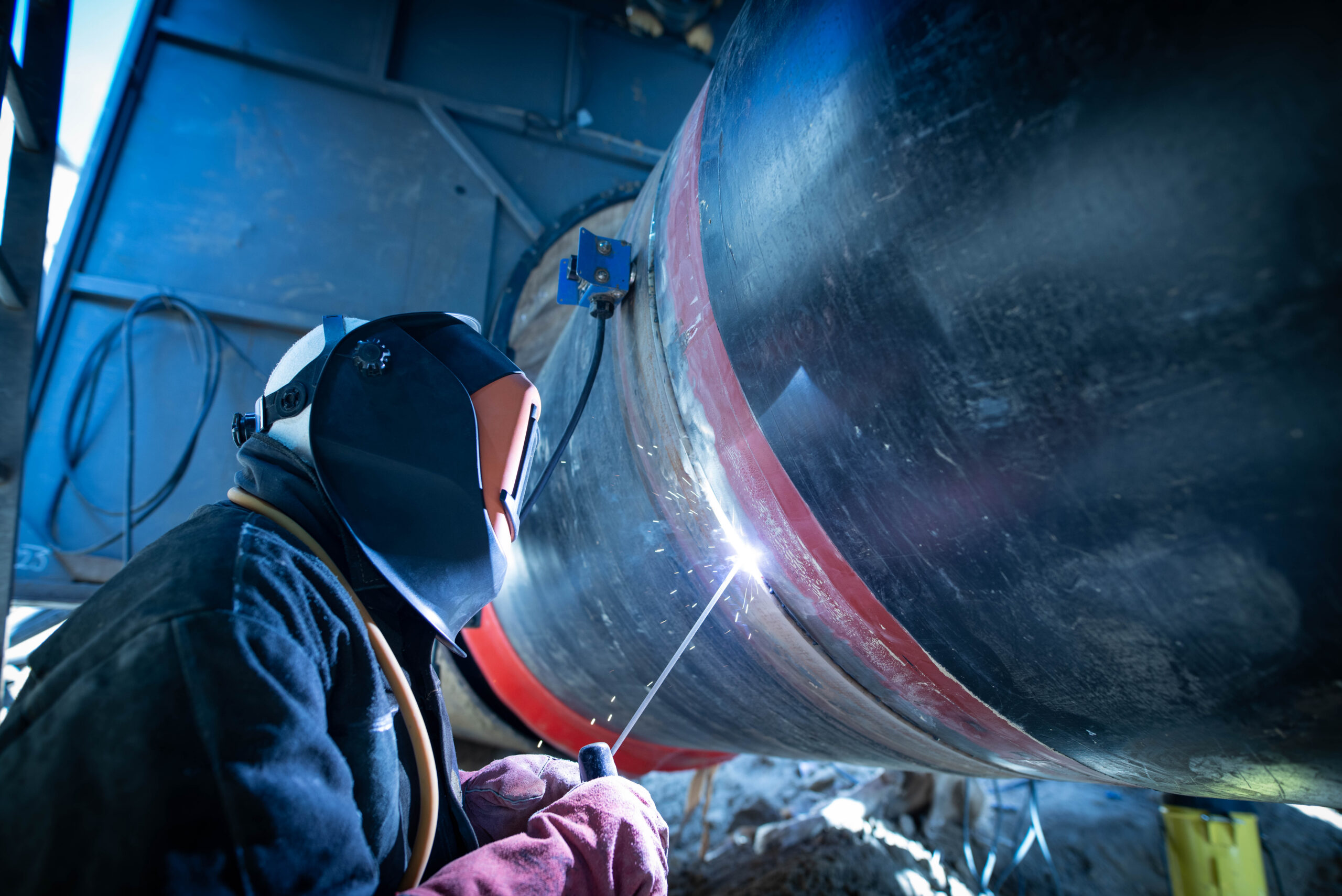
Weld joint protection has always been the hardest part of that equation. Every internally lined pipeline has the same weak point: the joint where two pipe sections meet and the heat of welding destroys whatever coating was there. For decades, the answer was robotic spray coating after the weld. It worked, sometimes. But it was slow, expensive, equipment-dependent, and inconsistent.
Sleeve design changed that. And it keeps changing.
Why Sleeve Design Had to Evolve
The Old Approach Was Not Built for Today’s Projects
The earliest internal weld joint solutions were built around the idea that you could coat your way out of the problem. Apply enough epoxy after the weld, cure it properly, inspect it carefully, and hope for the best. In a forgiving service environment with generous schedules and easy site access, this approach could work.
Today’s projects are not forgiving. Pipelines carry sour produced water, high-chloride brine, abrasive slurries, and industrial chemicals. They run at higher pressures over longer distances. They are built in remote locations on tight schedules by crews who cannot afford to wait for a robot to catch up with the welding spread.
The demands of modern pipelines pushed sleeve design toward solutions that are faster, more reliable, more chemically resistant, and compatible with a much wider range of lining systems than anything available before.
What Modern Sleeve Design Has to Solve
To understand where sleeve innovation has gone, it helps to understand what it had to solve:
- Weld joint protection that does not depend on post-weld spray equipment
- Sealing performance that holds under pressure cycling and chemical exposure
- Compatibility with thin coatings, thick rubber linings, and thermoplastic liner systems
- Installation by standard pipeline crews without specialized training
- Documentation and traceability that satisfies modern regulatory requirements
Every major advance in sleeve design over the past decade has addressed one or more of these requirements.
The Core Innovation: Pre-Weld Protection
Flipping the Sequence
The biggest conceptual shift in sleeve design was simple but transformative. Instead of protecting the weld joint after welding, protect it before.
Insert the sleeve before the joint is made. Align, weld, move on. The joint is protected the moment the weld is complete, with no waiting, no secondary operation, no equipment queue.
This sounds obvious in hindsight. But executing it reliably across different pipe diameters, lining systems, and field conditions required genuine engineering innovation in materials selection, dimensional tolerancing, sealing geometry, and installation procedure design.
Why Pre-Weld Protection Performs Better
A sleeve installed before the weld is not exposed to the same variables that compromise post-weld spray coating:
- No dependency on spray thickness consistency
- No adhesion risk to contaminated or irregular weld surfaces
- No curing time before the joint can be pressurized
- No inspection uncertainty about whether the coating meets the standard
The result is a weld joint that is protected by a manufactured component with defined, tested performance characteristics rather than by a field-applied coating whose quality depends on conditions on the day it was applied.
Key Innovations in Modern Sleeve Design
Pressure-Activated Sealing
One of the most significant advances in sleeve design is the pressure-activated seal. Traditional sleeve seals relied on mechanical compression at installation. These worked but were sensitive to installation variation and could relax over time under thermal cycling or pressure fluctuation.
Pressure-activated seals work the opposite way. As line pressure increases, the seal tightens. Operating pressure reinforces the seal rather than working against it. In demanding service environments where pressure cycles regularly, this is a meaningful performance advantage that holds up across the full service life of the pipeline.
The SealSleeve™ for Rubber and PU Linings and the SealSleeve™ for Thermoplastic Liners both use this sealing principle, making them well-suited for the high-pressure, chemically aggressive environments where thick-walled lined pipelines are most commonly used.
Flexible, Lightweight Construction for Fast Installation
Early sleeve designs were rigid and heavy. They required careful handling, precise insertion, and sometimes specialized equipment. On a pipeline spread moving at pace, this kind of complexity erodes the schedule advantages that sleeve-based systems are supposed to provide.
Modern sleeve design addresses this through materials innovation. The FlexSleeve® is purpose-built to be lightweight and flexible enough for fast insertion by standard pipeline crews without any specialized handling equipment. It conforms to normal pipe bore tolerances without requiring precise diameter matching, and it installs in the same time it takes to prepare the joint for welding.
For a full comparison of how this approach performs against robotic coating on the same type of project, the FlexSleeve® vs. Robot resource from LPS provides a detailed breakdown.
Lining-Specific Sleeve Engineering
One of the more underappreciated advances in sleeve design is the move away from one-size-fits-all solutions toward lining-specific engineering. Different lining systems create fundamentally different joint protection challenges:
- Thin epoxy coatings leave a relatively large bore but require coverage across an irregular, heat-affected surface
- Rubber and polyurethane linings create a thicker wall and tighter bore geometry with more demanding sealing requirements
- Thermoplastic liners impose the tightest bore constraints and require chemical compatibility between the sleeve and liner materials
Modern sleeve design addresses each of these categories with a purpose-engineered solution rather than a generic product modified to fit. The CCB® Sleeve for upstream line pipe, the FlexSleeve® for large-diameter ID-coated pipelines, and the SealSleeve™ product family for rubber, PU, and thermoplastic systems each reflect lining-specific engineering decisions that generic sleeve designs cannot match.
Bell and Spigot Joint Solutions
Not all pipelines use standard butt-weld joints. Water transmission pipelines in particular often use bell and spigot connections, which create their own joint protection challenges. Modern sleeve design has extended to cover this joint type as well.
The FlexSleeve® Bell and Spigot brings the same pre-weld protection principle to bell and spigot pipeline construction, giving water infrastructure operators a sleeve design option that matches their jointing system without requiring a change in construction method.
Tie-In Joint Solutions
Tie-in joints are among the most difficult welding situations in pipeline construction. They involve connecting into an existing system, often in confined or constrained conditions, where standard sleeve insertion procedures may not be possible.
Modern sleeve design accounts for this scenario through the Joint Lock Rings for Tie-Ins product line from LPS. This gives EPC contractors a verified joint protection solution even at the points on the pipeline where standard approaches break down.
Sleeve Design and the Hydrogen Pipeline Challenge
A New Service Environment with Familiar Problems
The global energy transition is driving rapid growth in hydrogen pipeline infrastructure. Hydrogen pipelines present a unique combination of challenges:
- High hydrogen embrittlement risk in unprotected steel
- Extreme purity requirements for the transported gas
- The same weld joint vulnerability that affects any internally lined pipeline
The sleeve design principles that have proven effective in corrosive liquid service translate directly to hydrogen pipeline applications. A sleeve that provides a verified, continuous barrier at the weld joint in sour gas service will provide the same barrier in hydrogen service, adapted for the specific material compatibility requirements of hydrogen transport.
According to the Hydrogen Council, global hydrogen pipeline infrastructure is expected to expand significantly over the coming decade. Sleeve design innovation is already being adapted to meet the integrity requirements of this new category of pipeline infrastructure.
Supporting the Energy Transition More Broadly
Beyond hydrogen, the energy transition is increasing demand for CO2 transport pipelines for carbon capture and sequestration (CCS) projects, as well as pipelines carrying ammonia, methanol, and other energy carriers. Each of these fluids presents specific corrosion and integrity challenges at weld joints.
Modern sleeve design, with its foundation in chemical compatibility engineering and pressure-activated sealing, is well-positioned to address these emerging service categories without requiring entirely new technology development.
What Innovation in Sleeve Design Means for Operators and Contractors
Less Schedule Risk on Construction Projects
For EPC contractors, the practical value of modern sleeve design is faster construction with fewer variables. No robotic equipment to mobilize and maintain, no coating queue creating a bottleneck behind the welding spread, no uncertain inspection outcomes when spray thickness falls short.
For a detailed look at how this plays out on real projects, the FlexSleeve® Case Studies from LPS document actual schedule and quality outcomes across a range of project types.
Longer Asset Life for Pipeline Operators
For operators, modern sleeve design means weld joints that are protected by manufactured components with defined service life characteristics rather than by field-applied coatings with inherent variability. This translates directly into:
- Fewer anomalies in in-line inspection results
- Lower corrosion-related maintenance costs over the pipeline’s service life
- Stronger evidence base for integrity management programs under ASME B31.4 and ASME B31.8
Better Documentation for Regulatory Compliance
Regulatory expectations for pipeline integrity management have increased steadily across jurisdictions. The Association for Materials Protection and Performance (AMPP) and API both publish standards that require operators to document how weld joints are protected and to demonstrate that protection systems meet defined performance criteria.
How LPS Drives Sleeve Design Innovation
Lined Pipe Systems has been at the center of sleeve design development for internally lined pipelines. The company’s approach has always been to start with the real construction and service environment constraints and engineer backward to a sleeve design that works within them.
That means close engagement with operators and EPC contractors during the design phase, not just at the point of supply. LPS engineers review service fluid chemistry, lining specifications, pipe geometry, welding procedures, and construction logistics to specify the sleeve design that fits the project rather than the project that fits the sleeve.
To see the full range of LPS sleeve design options, the LPS Products General Brochure provides a complete overview organized by lining system and application type.
Conclusion
Sleeve design has evolved from a niche workaround for the robotic coating problem into a core component of modern pipeline engineering. The pressures, chemicals, diameters, and construction schedules that today’s pipelines demand have pushed sleeve technology toward solutions that are faster, more reliable, more versatile, and better documented than anything the industry had access to even ten years ago.
The weld joint will always be the most vulnerable point in an internally lined pipeline. Modern sleeve design has made it one of the most reliably protected ones.
Contact the LPS team to discuss the right sleeve design for your next pipeline project.