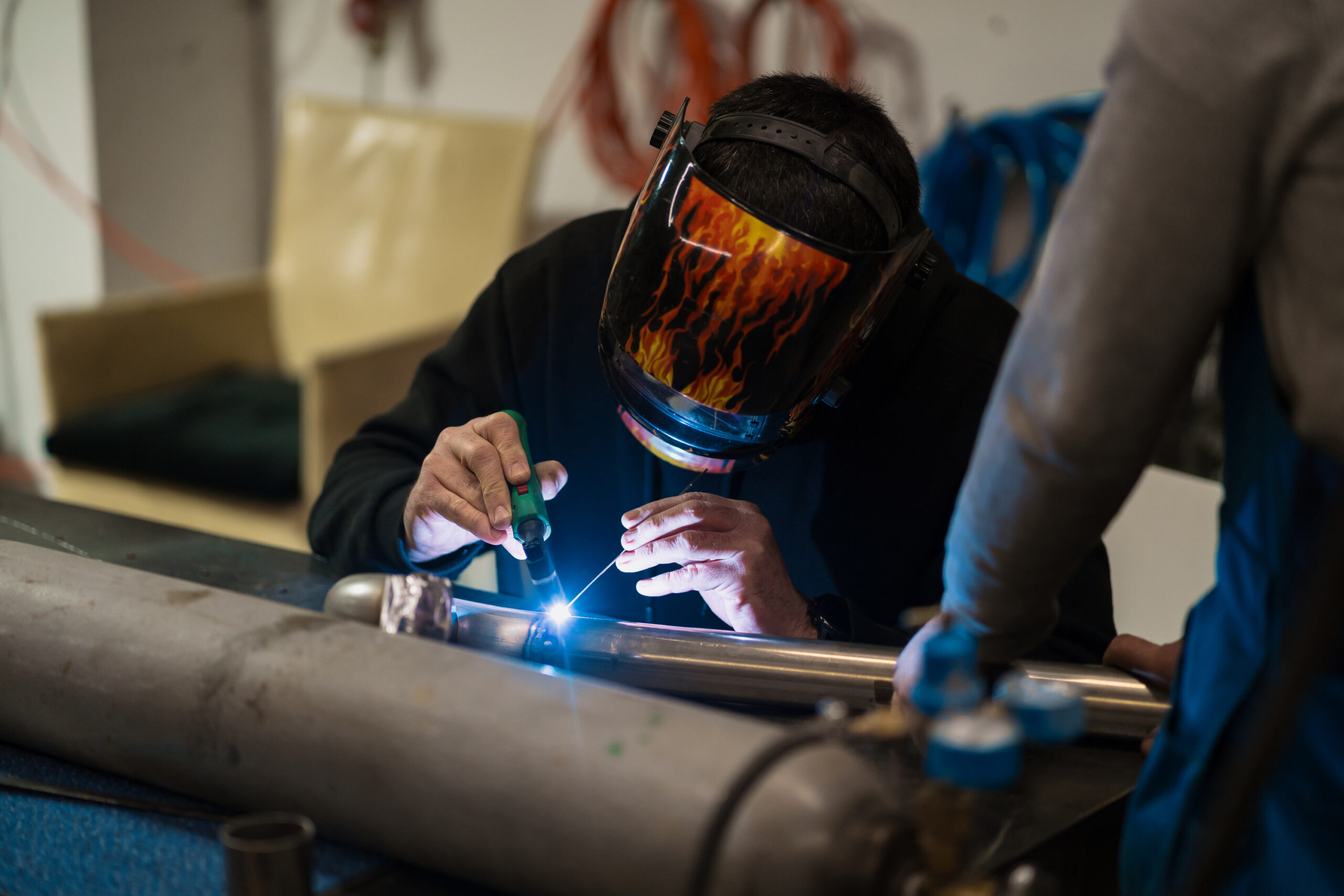
Pipeline operators invest heavily in internal linings. Epoxy coatings, polyurethane systems, and thermoplastic liners all perform well on the pipe body. However, the moment a welder strikes an arc, the heat destroys that lining at the joint zone, leaving bare steel exposed to the service fluid from day one.
As a result, that single, repeating vulnerability can become a primary point where internal corrosion begins. Moreover, on a long pipeline with hundreds of joints, this means hundreds of potential corrosion starting points are built into the system before it ever carries a drop of fluid.
Fortunately, an internal pipe weld sleeve provides a direct solution. Installed before the weld is made, it bridges the joint zone and seals it against the service fluid permanently. In this guide, we explain how internal pipe weld sleeves work, which types are available, and what you should verify before specifying one for your project.
What Is an Internal Pipe Weld Sleeve?
An internal pipe weld sleeve is a manufactured component that installers insert into the pipe end before assembling the joint. Once positioned, the sleeve bridges the gap between the internal coatings on the two pipe sections, covering the weld zone and sealing it against the service fluid.
Unlike post-weld coating, which attempts to restore protection after welding destroys the lining, an internal pipe weld sleeve protects the joint before welding begins. The sleeve stays in place when the welding arc strikes, shielding the joint from the start. As a result, the pipeline enters service with the joint already protected, rather than relying on a technician to restore protection hours after welding.
For a broader understanding of where this fits within a full corrosion management strategy, the LPS guide on internal pipeline protection covers the complete picture.
Why Weld Joints Need Dedicated Protection
The Gap That Every Field Weld Creates
ID pipe coatings perform reliably on the pipe body. Shop-applied linings are carefully controlled and inspected, so the coating is consistent before the pipe leaves the facility. The problem, however, starts when the pipe is welded in the field.
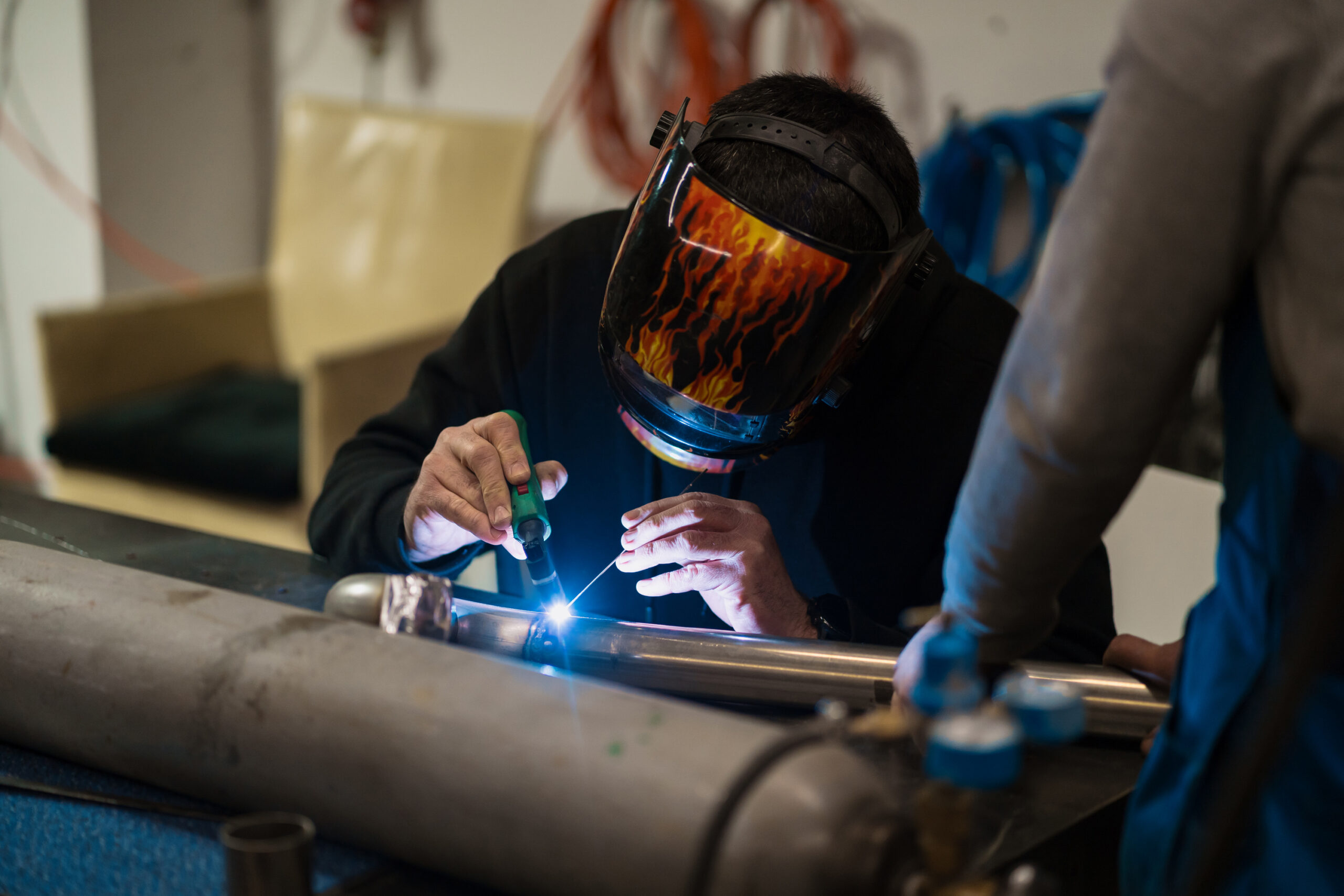
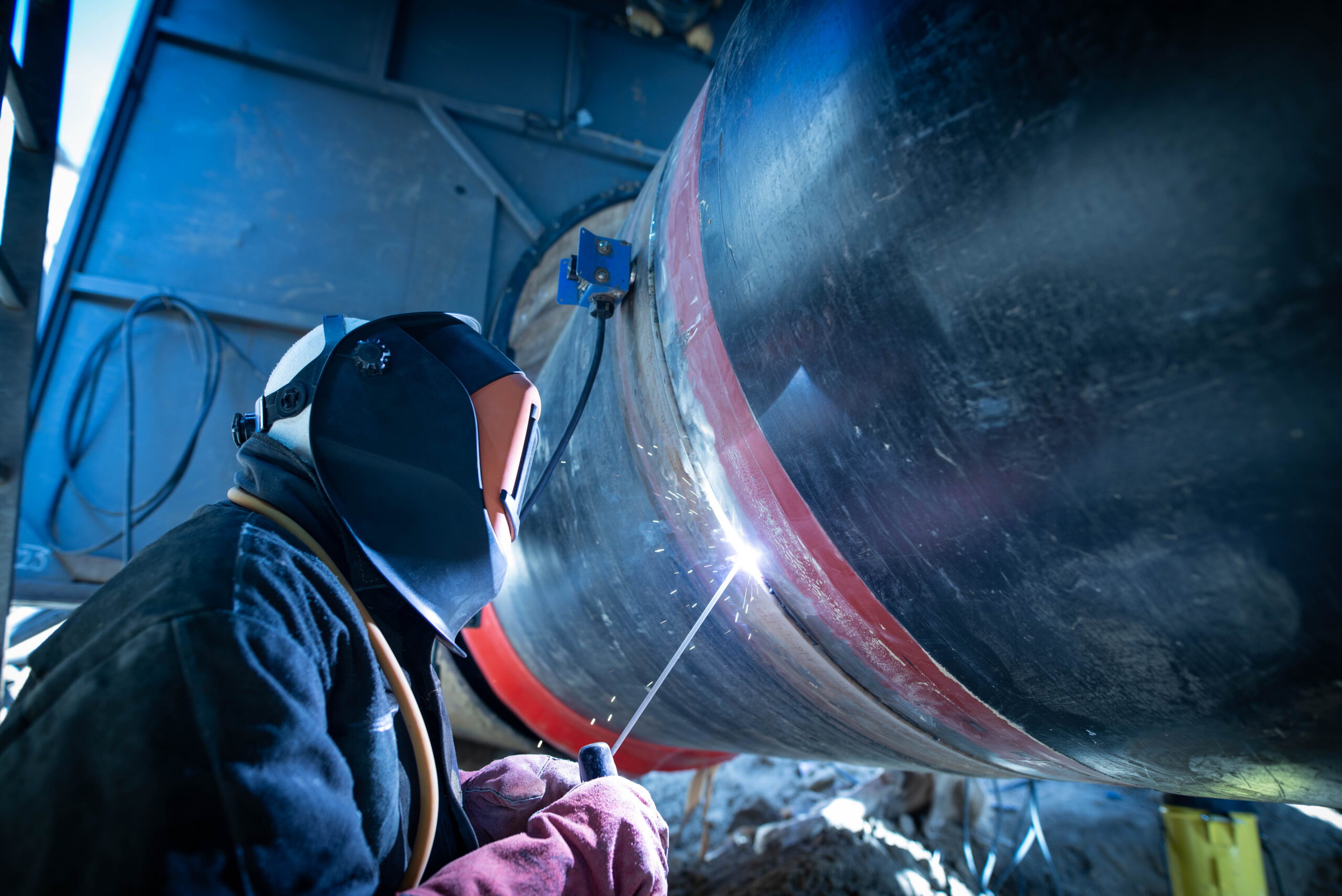
The heat from the welding arc destroys the lining within the heat-affected zone on both sides of the joint. This leaves a band of bare carbon steel surrounded by an otherwise well-protected pipeline. In aggressive environments, internal corrosion can develop quickly at this exposed steel. In milder environments, the process may take longer. Either way, the joint remains a vulnerable point where corrosion can begin.
This is why understanding the full range of types of pipeline corrosion that can occur at these unprotected zones is important. Weld joints repeatedly become a focus in pipeline failure investigations because they represent a built-in gap in an otherwise continuous lining system.
Why Post-Weld Coating Alone Is Not Sufficient
The traditional response to this problem is field joint coating applied after each weld. In theory, this re-protects the joint zone. In practice, spray thickness varies, surface preparation in the field is inconsistent, and curing depends on ambient conditions that change daily.
Those variables produce inconsistent outcomes, which is precisely why field joint coating failures remain a leading cause of early internal corrosion incidents. An internal pipe weld sleeve replaces all of that variability with a manufactured, tested component installed before the weld even begins.
How an Internal Pipe Weld Sleeve Works
Protection Is Installed Before the Weld
The sleeve is inserted into the pipe end before joint assembly. The construction crew verifies centering and alignment, then welds the joint using standard procedures. When the weld is complete, the sleeve already sits in position, bridging the gap and sealing the joint zone against the service fluid.
There is no spray application, no curing window, and no inspector judgment call on coating thickness. Protection is built into the joint at the moment it is made. For a real-world look at this sequence, the LPS welding demonstration for internally lined pipe shows exactly how it works on site.
It Creates a Continuous Internal Barrier
Together, the internal lining on the pipe body and the sleeve at the joint create a continuous internal barrier with no bare steel exposed to the service fluid anywhere along the pipeline. The lining covers the pipe body. The sleeve covers every joint. The insert pipe sleeve technologies for internally coated pipelines article covers how this barrier compares to alternative approaches in detail.
Pressure-Activated Sealing
The most advanced internal pipe weld sleeve designs use pressure-activated seals. As line pressure increases, the seal tightens rather than relaxing. This means that operating pressure actively reinforces the joint protection, which is especially valuable in high-pressure or cyclic-pressure service environments where mechanical seals can weaken over time.
Choosing the Right Internal Pipe Weld Sleeve
Not every sleeve suits every pipeline. The right choice depends on the lining type, pipe geometry, and service environment. The table below shows which sleeve matches each application.
| Lining Type | Recommended Sleeve | Key Requirement | Typical Application |
| Epoxy / thin ID coating | FlexSleeve® | Lightweight, flexible, fast install | Water, brine, oil and gas gathering |
| Upstream line pipe | CCB® Sleeve | Resistance to H₂S, CO₂, chlorides | Upstream produced fluid pipelines |
| Rubber / polyurethane lining | SealSleeve™ Rubber/PU | Pressure-activated seal, tight bore | Chemical, industrial, aggressive service |
| Thermoplastic liner | SealSleeve™ Thermoplastic | Chemical compatibility, constrained bore | High-spec chemical and energy pipelines |
| Tie-in / repair welds | LPS Tie-In Solutions | Installation in constrained conditions | System tie-ins, repair welds |
ID-Coated and Thin-Lining Pipelines
The FlexSleeve® is the most widely deployed internal pipe weld sleeve for large-diameter pipelines with epoxy or thin internal coatings. It is lightweight, flexible, installs without specialized equipment, and works within normal pipe bore tolerances. Its project record spans water infrastructure, brine pipelines, and oil and gas gathering systems across multiple continents.
For a direct side-by-side comparison with robotic coating on the same type of project, the LPS resource on FlexSleeve vs robotic or manual internal joint coatings shows the performance difference clearly.
Upstream Line Pipe
For upstream oil and gas pipelines carrying produced fluids with chlorides, CO2, and H2S, the CCB® Sleeve is the proven choice. It brings 30 years of documented performance in the most aggressive upstream environments, as covered in detail in the LPS article on CCB Sleeve: 30 years of protecting pipelines.
Rubber and Polyurethane Linings
Rubber and polyurethane linings serve more aggressive service environments. The liner wall is thicker, the bore is tighter, and the sealing requirement is more demanding. The SealSleeve™ uses a pressure-activated sealing system designed specifically for these conditions, where mechanical seals that rely purely on compression can relax over time.
Thermoplastic Liners
Thermoplastic liners are used in the most chemically demanding environments and present the most complex internal pipe weld sleeve challenge. The liner wall is thick, the bore is tightly constrained, and chemical compatibility between sleeve and liner must be verified for the specific service fluid.
The SealSleeve™ for thermoplastic liners maintains the chemical barrier at the joint that the liner provides on the pipe body. For a full comparison of thermoplastic liner systems and how sleeve protection applies to each type, the LPS technical resources cover every configuration.
Tie-In and Repair Welds
Tie-in operations and repair welds carry the same joint protection requirement as original construction welds. A repair weld without an internal pipe weld sleeve simply introduces a new unprotected bare steel zone at the exact point that was just fixed, restarting the corrosion cycle at that location. LPS provides sleeve solutions specifically designed for tie-in and repair contexts where standard insertion procedures may not apply.
What the Installation Process Looks Like
A well-designed internal pipe weld sleeve integrates into the standard construction sequence without adding a separate operation or requiring specialized equipment on site. The process is straightforward:
- Insert the sleeve into the pipe end before joint assembly
- Verify centering and alignment against the pipe centerline
- Complete the weld using standard qualified procedures
- Confirm seal activation during post-weld pressure testing
- Document the installation and move to the next joint
No robotic coating equipment follows behind the spread. No inspector discretion determines whether the joint meets the standard. The FlexSleeve insertion demonstration from LPS shows the full sequence in real field conditions.
What to Verify Before Specifying
Getting the specification right matters as much as choosing an internal pipe weld sleeve in the first place. Before committing to a system, operators and engineers should confirm:
- Chemical compatibility — sleeve materials, sealing elements, and bonding systems must be verified against the actual service fluid chemistry, not generic compatibility data
- Pressure and temperature testing — the sleeve must have been tested at the real operating envelope of this pipeline, not just nominal design conditions
- Lining-specific design — the sleeve must be engineered for the specific lining type in use, not adapted from a different application
- Construction compatibility — the installation procedure must fit the planned welding sequence and crew capabilities on site
- Documentation and traceability — the supplier must provide traceable material certifications and objective installation verification at every joint
According to AMPP (Association for Materials Protection and Performance), internal corrosion management programs must be documented and defensible. An internal pipe weld sleeve system with traceable records at every joint directly satisfies that requirement.
The Long-Term Impact on Pipeline Integrity
| Area | Without Sleeve Protection | With Internal Pipe Weld Sleeve |
| ILI results | Anomalies accumulate at weld zones over time | Clean results, fewer investigations required |
| Integrity programs | Growing cost and complexity year over year | Leaner, more predictable, lower cost |
| Asset life | Risk of premature rehabilitation | Full designed service life achievable |
| Emergency repairs | Weld-zone failures drive unplanned shutdowns | Eliminated as a failure category |
| Compliance records | Reactive documentation after failures | Traceable records at every joint from day one |
Fewer Anomalies Over the Asset Life
Unprotected weld joints accumulate corrosion anomalies over time. Each anomaly demands investigation, fitness-for-purpose assessment, and often repair or monitoring. An internal pipe weld sleeve at every joint produces significantly cleaner in-line inspection results, which lowers investigation costs and simplifies integrity management across the full asset life.
Pipelines That Reach Their Designed Service Life
A pipeline that protects every weld joint from day one avoids the compounding corrosion damage that forces premature rehabilitation. Real-world evidence of this is visible in projects like the desalinated water pipeline in Morocco and the Corpus Christi potable water pipeline, both of which demonstrate how sleeve-based joint protection performs across full project lifecycles.
Stronger ESG and Compliance Position
Every corrosion-driven failure carries ESG costs alongside its financial ones. Internal pipe weld sleeve protection reduces the probability of those failure events and supports stronger ESG compliance performance over the pipeline’s life, which matters increasingly to operators, investors, and regulators alike.
Conclusion
An internal pipe weld sleeve is not just a corrosion control component. Instead, it is what allows an internally lined pipeline to function as a fully protected system, rather than a well-coated pipe with hundreds of unprotected weak points built into every joint.
For this reason, choosing the right internal pipe weld sleeve for the lining system, service environment, and construction context is critical to ensuring that the protection remains effective throughout the asset’s designed service life. When selected and installed correctly, it can transform a vulnerable joint into one of the most reliably protected points on the pipeline.
Ultimately, the right internal pipe weld sleeve helps preserve the integrity of the entire lining system while providing dependable protection where it matters most.