Pipelines that transport corrosive chemicals, produced water, brine, acids, or aggressive industrial fluids operate in some of the most demanding conditions in the industry. Internal linings, epoxy coatings, polyurethane, rubber, or thermoplastic provide the first line of defence against chemical attack on the steel pipe body. But every lining system has the same point of failure: the weld joint.
When field welding burns through the internal coating at each joint, it leaves bare steel directly exposed to whatever corrosive fluid flows through the line. In a mild service environment, this might take years to cause a visible problem. In a harsh chemical environment, the degradation can begin within months of commissioning. This is where sleeves for pipelines become not just useful but essential, providing permanent weld joint protection that stands up to the most aggressive service conditions.
Why Harsh Chemical Environments Demand More from Pipeline Protection
The Chemistry of Internal Corrosion
Internal corrosion in pipelines is driven by the chemical composition of the fluid being transported. In oil and gas upstream service, produced fluids carry chlorides, carbon dioxide (CO₂), and hydrogen sulfide (H₂S), a combination that creates highly acidic, highly corrosive conditions at the pipe wall. Water and wastewater infrastructure, high salinity, dissolved oxygen, and microbially influenced corrosion (MIC) attack bare steel aggressively. In industrial and chemical service, the range of corrosive agents is even broader.
According to the Association for Materials Protection and Performance (AMPP), internal corrosion accounts for a significant proportion of pipeline failures globally, with weld zones being disproportionately represented in failure data. The reason is straightforward: the weld joint is the one location where construction activities make it most difficult to maintain internal protection and most likely to compromise it.
Why Standard Coatings Fail at Weld Joints
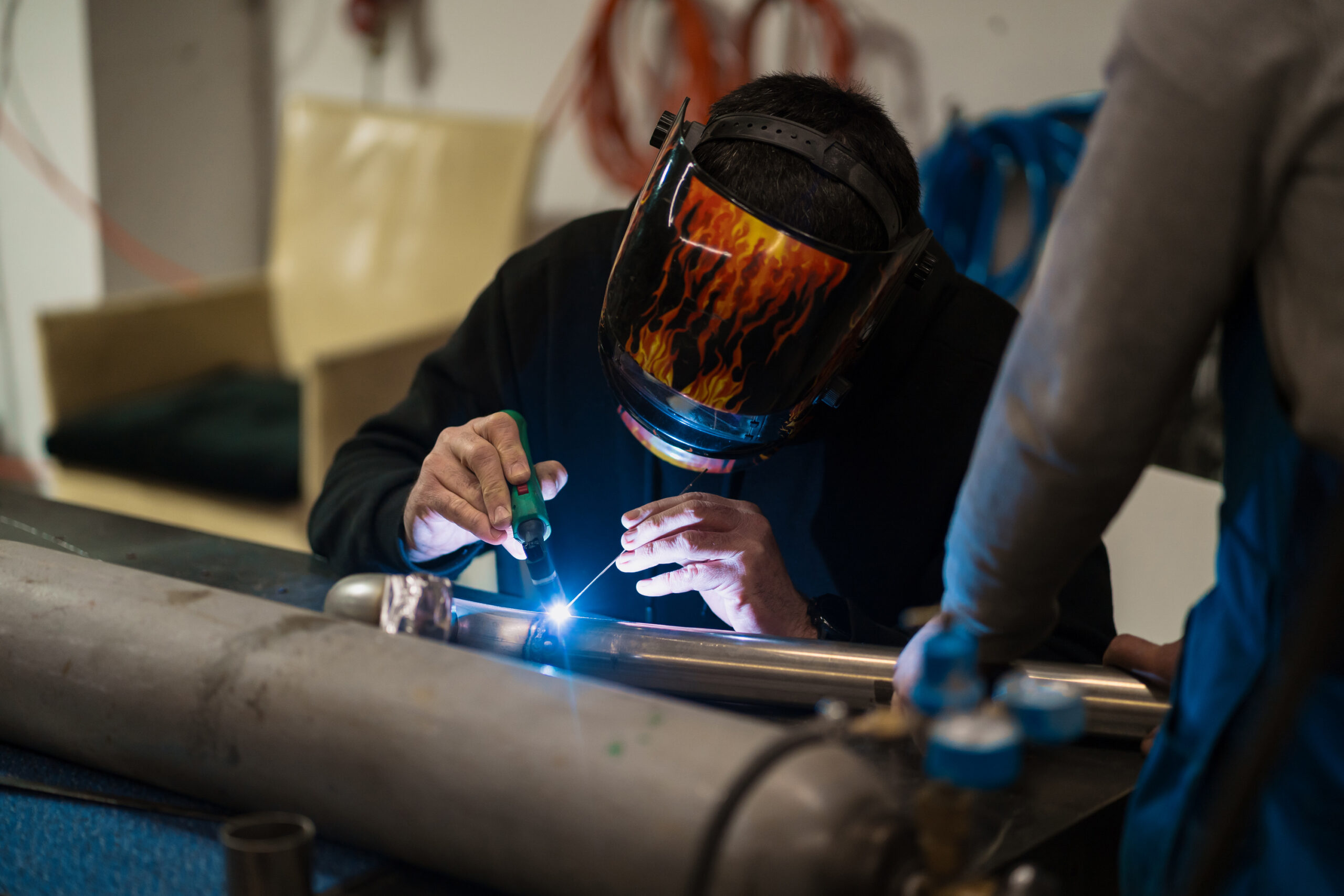
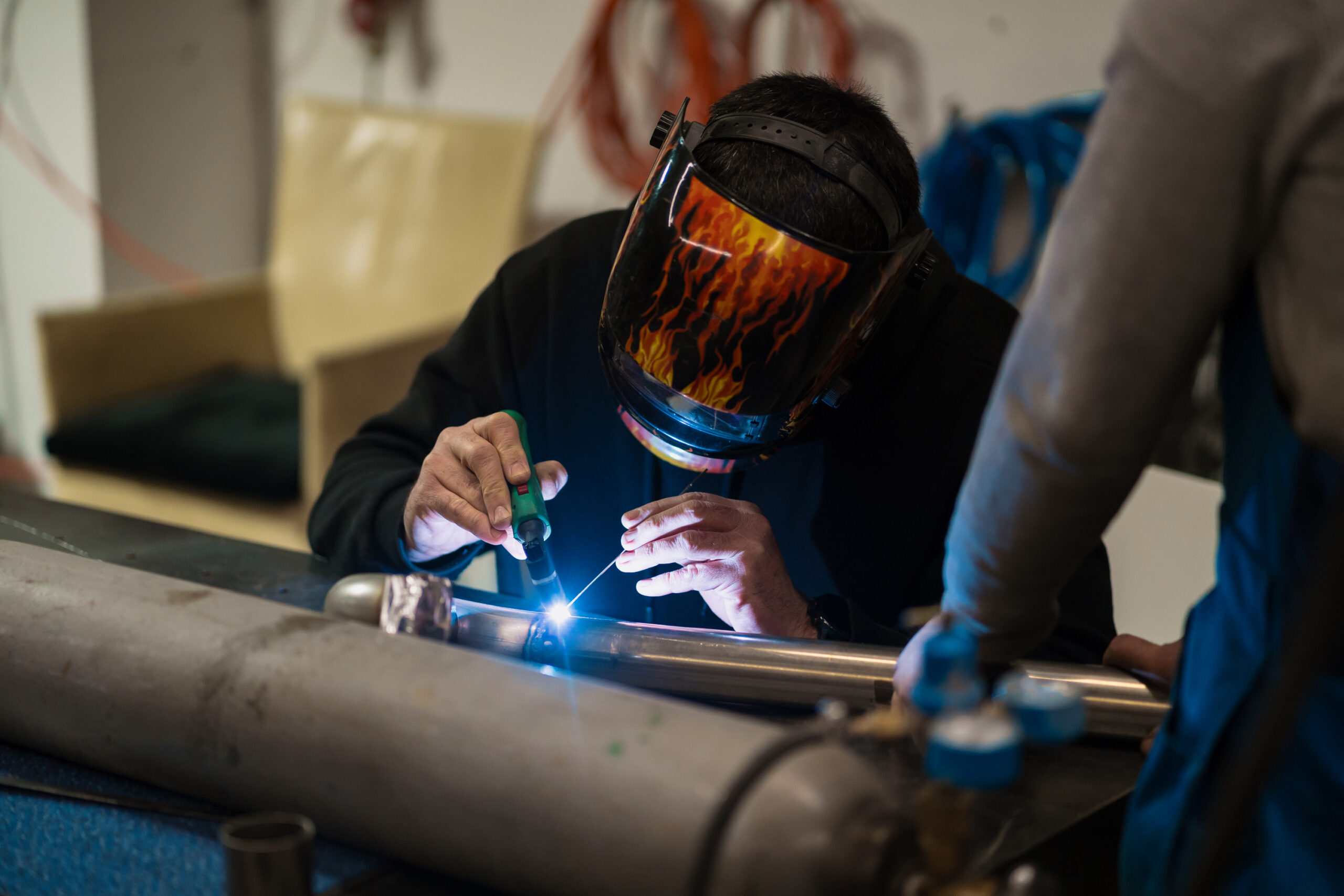
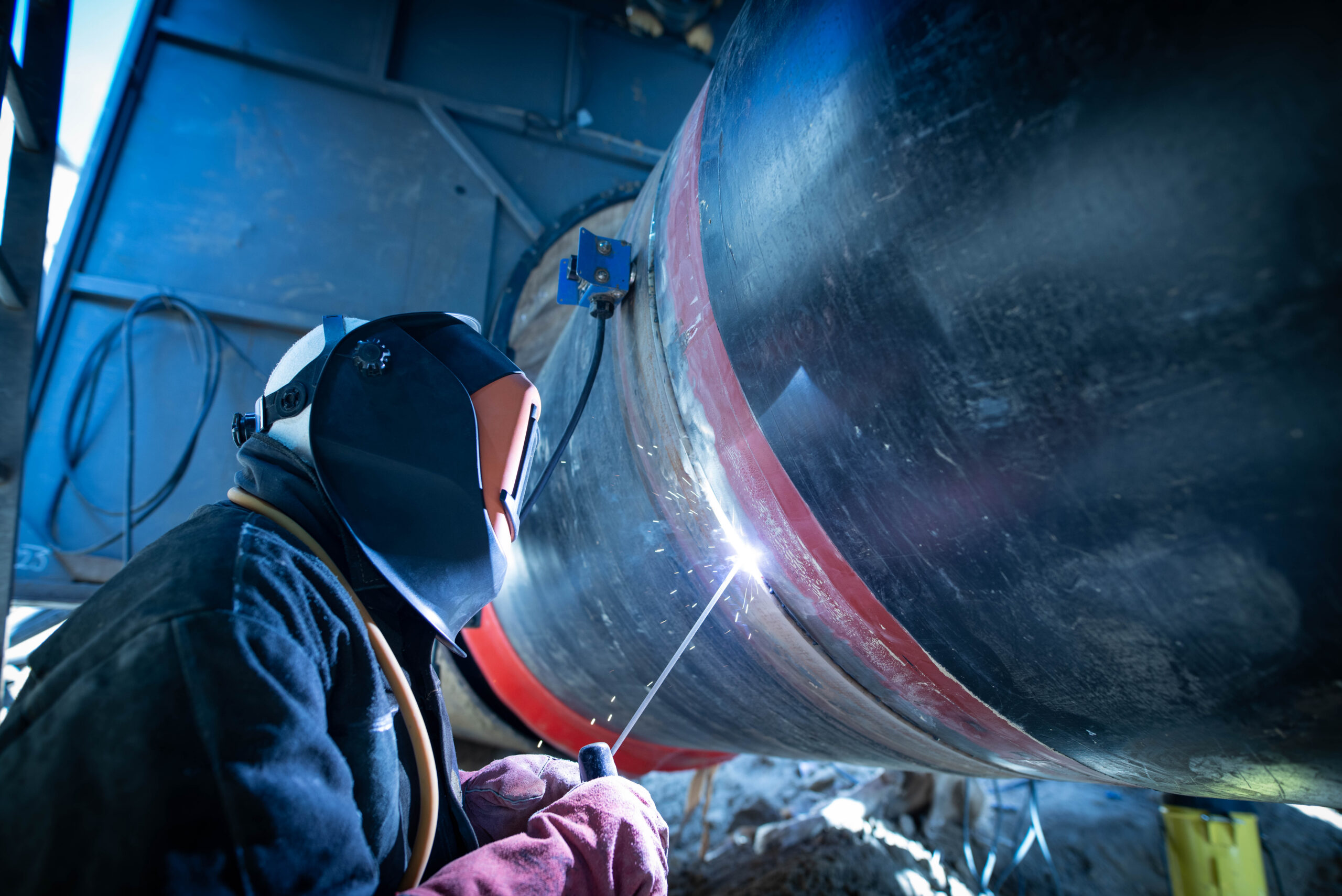
A high-quality internal epoxy or polyurethane coating applied to a pipeline in a controlled shop environment can provide decades of corrosion protection on the pipe body. However, when crews weld the pipe in the field, the heat from the welding arc destroys the coating within the heat-affected zone and leaves a band of bare steel at every joint.
In a harsh chemical environment, this unprotected zone becomes the site of rapid, localised corrosion that progresses from the inside out, invisible to external inspection until it causes a leak or requires emergency intervention.
The NACE SP0169 standard addresses corrosion control on pipeline systems, but it is clear that internal protection requires continuous coverage, which a post-weld coating applied in the field may not reliably provide under harsh service conditions. Sleeves for pipelines solve this problem by creating a manufactured, verified barrier at the joint before crews even make the weld.
What Makes Sleeves for Pipelines Effective in Chemical Service
Manufactured Quality vs. Field-Applied Coating
The fundamental advantage of pipeline sleeves over post-weld spray coating is consistency. A sleeve is a manufactured component with defined dimensions, verified material properties, and a predictable sealing geometry. It does not depend on spray thickness, adhesion to a contaminated surface, or curing conditions in a field environment. In harsh chemical service where even small gaps in protection lead to accelerated failure, this consistency is critical.
When engineers specify sleeves for pipelines in chemical service, they select a protection system whose design defines its performance and whose testing verifies it, rather than relying on the conditions present on the day a coating technician arrives to spray the joint.
Pressure-Activated Sealing in Aggressive Environments
The most demanding chemical service environments require sleeve designs that maintain their seal under pressure cycling, thermal expansion, and chemical exposure over the full service life of the pipeline. Pressure-activated sleeve seals address this requirement directly. As line pressure increases, the seal tightens rather than loosening. This means that the most severe operating conditions actually reinforce the sealing performance, rather than working against it.
This sealing mechanism is particularly important in upstream oil and gas service, where produced fluid pressure can fluctuate significantly, and the chemical aggressivity of the fluid increases the consequence of any seal degradation.
Chemical Compatibility of Sleeve Materials
Effective sleeves for pipelines in harsh chemical environments are engineered from materials selected for chemical compatibility with the service fluid. The sleeve body, sealing elements, and any adhesive or bonding systems must all resist degradation from the specific chemical agents present, whether that is H₂S in sour gas service, chlorides in brine, or specific industrial chemicals in process pipeline applications.
ASME B31.3 for process piping and ASME B31.4 for liquid transmission pipelines both require that materials in contact with the process fluid be compatible with that fluid under operating conditions. Sleeve selection must reflect these requirements, and the sleeve supplier must be able to document chemical compatibility for the specific service environment.
Sleeves for Pipelines Across Harsh Chemical Service Categories
Different chemical environments present different challenges, and the right sleeve design depends on understanding what the pipeline is carrying and how aggressive that fluid is at the pipe wall.
Sleeves for Pipelines in Upstream Oil and Gas Service
Produced fluids in upstream oil and gas service are among the most corrosive substances that pipelines routinely carry. The combination of chlorides, CO₂, and H₂S creates conditions that can cause severe localised corrosion at unprotected weld joints within a very short operational period.
The CCB® Sleeve from Lined Pipe Systems is designed specifically for upstream line pipe with thin ID coatings in aggressive produced fluid environments. Its sleeve design is proven in service conditions where produced water chemistry, operating temperatures, and pressure cycling would rapidly degrade an inadequately protected weld joint. For upstream operators managing corrosion risk across gathering systems and trunk lines, the CCB® Sleeve provides a cost-effective, field-proven solution.
Sleeves for Pipelines Carrying Brine and Produced Water
Brine and produced water pipelines present a specific corrosion challenge because of the extremely high chloride concentrations involved. High-chloride fluids attack bare steel through pitting corrosion, a mechanism that creates deep, localised attack rather than the uniform wall loss that is easier to detect and manage.
A recent LPS project demonstrated exactly this challenge: engineers for a major midstream operator in Texas were transporting highly corrosive brine in a 36-inch diameter pipeline with a robust internal epoxy coating. The challenge was protecting the weld joints without access for manual coating of the interior. The project team selected FlexSleeve® for the tie-in joints, enabling the crew to complete the installation without confined space entry, pass NDE examination, and commission the pipeline while saving several days of construction time.
The FlexSleeve® is purpose-designed for ID-coated large-diameter pipelines in exactly these environments, lightweight and flexible for fast installation, while providing reliable weld zone coverage that holds up under the chemical conditions that brine pipelines impose.
Sleeves for Pipelines with Rubber and Polyurethane Linings
For pipelines carrying highly aggressive chemicals, acids, alkalis, or specific industrial process fluids, rubber and polyurethane linings are often specified because of their superior chemical resistance compared to fusion-bonded epoxy or similar coatings. These linings provide excellent protection on the pipe body but create a more complex joint protection challenge because of their wall thickness and the tighter bore geometry they create.
The SealSleeve™ for Rubber and PU Linings addresses this challenge directly. The sleeve is engineered to seal directly against rubber or polyurethane liner surfaces at the joint zone, ensuring continuous internal protection across the weld. Its pressure-activated sealing system maintains long-term performance even under the demanding chemical and pressure conditions typical of these pipeline applications.
According to AWWA C222 for polyurethane lining of steel water pipe, the internal lining system must provide continuous protection, a requirement that extends to the joint zone and that sleeve-based systems are specifically designed to satisfy.
Sleeves for Pipelines with Thermoplastic Liners
Engineers increasingly use thermoplastic liners, including HDPE, PVDF, and other high-performance polymer systems, in chemical service pipelines because these materials resist a broad range of corrosive agents. These liners withstand chemical environments that can degrade even high-performance epoxy or polyurethane systems.
However, thermoplastic-lined pipelines create the most demanding joint protection challenge in any lined pipe category. Their thick liner walls, tightly constrained bore geometry, and strict sealing requirements force engineers to use joint protection systems that match the chemical resistance of the liner itself.
The SealSleeve™ for Thermoplastic Liners provides a sleeve design specifically engineered for these applications. It maintains the chemical barrier at the weld joint that the thermoplastic liner provides on the pipe body, ensuring that the most chemically resistant lining system available is not undermined by an unprotected joint. For detailed technical specifications, the SealSleeve™ Thermoplastic Liners Brochure provides a full overview of available configurations.
Installation Considerations for Chemical Service Pipelines
Pre-Installation Compatibility Verification
Before specifying sleeves for pipelines in harsh chemical environments, engineers must verify that the sleeve materials, including sealing elements, body materials, and any bonding systems, are compatible with the specific service fluid. Chemical compatibility testing against the actual produced fluid or process chemical, rather than a generic proxy, is the appropriate standard for demanding applications.
LPS engineers engage with project teams during the design phase to review service fluid chemistry, operating temperature and pressure envelopes, and liner system specifications, ensuring that the sleeve selected is appropriate for the specific chemical environment the pipeline will encounter.
Surface Preparation in Chemical Service
Sleeve installations in chemical service pipelines follow the same surface preparation requirements as any other sleeve application, but the consequences of inadequate preparation are amplified. In aggressive chemical environments, service fluids rapidly exploit any contamination at the sealing interface that prevents the sleeve seal from forming correctly. Engineers must enforce surface preparation as a mandatory quality hold point, not treat it as an afterthought, in chemical service applications.
Documentation and Traceability
Chemical service pipelines are often subject to more stringent regulatory oversight than standard service pipelines, particularly in the oil and gas sector under API 570 piping inspection requirements or in industrial applications governed by process safety management frameworks. Operators must fully document sleeve installations in these environments, including sleeve material traceability, compliance with installation procedures, and post-weld verification results, to satisfy integrity management and regulatory requirements.
The Long-Term Case for Sleeves for Pipelines in Chemical Service
Preventing Premature Pipeline Failure
In harsh chemical environments, an improperly protected weld joint does not create a slow-developing problem. It creates a fast-developing one. Corrosive media in sour service, high-chloride brine, and aggressive chemical pipelines rapidly attack unprotected weld zones, causing localised corrosion that can reduce the pipe wall to a leakable condition within months of commissioning, long before operators can detect it through in-line inspection or standard monitoring systems.
Sleeves for pipelines in these environments are not a premium add-on to the construction scope. They are the difference between a pipeline that performs to its designed service life and one that fails prematurely with all the operational, financial, and safety consequences that entail.
Reducing Inspection and Maintenance Burden
Operators of chemical service pipelines carry a significant inspection and maintenance burden, driven by the aggressive nature of the service fluid and the regulatory requirements for pipeline integrity management. Verified sleeve systems properly protect weld joints, reduce the anomaly burden in in-line inspection results, simplify integrity management, and support longer intervals between intervention programs.
The LPS FlexSleeve® Case Studies document how sleeve-based weld joint protection has performed across a range of demanding service environments, providing operators with real-world evidence of long-term protection performance.
Conclusion
Sleeves for pipelines in harsh chemical environments protect the single most critical vulnerability in any internally lined pipeline system: the weld joint. Sleeve-based systems create a manufactured, verified, chemical-resistant barrier at the joint zone before welding begins, ensuring that the welding process does not undermine the corrosion protection provided by the internal lining.
From upstream oil and gas gathering systems carrying sour produced fluids, to midstream brine pipelines, to industrial chemical service applications, the right sleeve design provides the long-term internal protection that these demanding environments require.
Contact the LPS team to discuss the right sleeve solution for your chemical service pipeline project.