In recent years, many pipeline owners and contractors have turned to robot-applied internal joint coating systems to manage corrosion at weld zones. The idea was promising: robotic units enter the pipe, blast-clean the weld zone, and apply epoxy coatings internally.
But on real-world projects, especially high-stakes transmission pipelines, the promise hasn’t been delivered. Today, we’re seeing more delays, higher costs, and inconsistent protection, all of which have pipeline engineers and EPC contractors rethinking their internal joint protection strategies.
The Core Problem with Internal Joint Coating Robots
Robot-applied coating systems are designed to address one specific issue: the gap in internal lining at welded joints. Since thermoplastic liners and rubber coatings can’t survive high heat during welding, they are cut short at the pipe ends, leaving the weld zone bare. In theory, a robot enters the pipe after welding, cleans the weld zone, and applies epoxy.
But in practice? It’s rarely that smooth.
Real-World Delays: The Chilean Project Case
Lined Pipe Systems recently supported a pipeline project in Chile that originally specified robot-applied internal joint coating. But when construction began, the robot application team caused significant delays. Robots couldn’t keep up with the welding pace, and each tie-in required days of planning and execution. The project fell weeks behind schedule. Eventually, the contractor replaced the robotic coating plan with FlexSleeve® technology, completing the line without further delay.
This is not an isolated case. On another large-diameter transmission line in South America, contractors working with major EPCs like Saipem and Bechtel faced similar hurdles. Despite mobilizing multiple robotic coating crews, the internal epoxy system slowed mainline welding. FlexSleeve® was ultimately specified for tie-in joints, and the contractor is now considering switching the full line to sleeves.
Coating Quality Isn’t Consistent
Even when robots operate as planned, they struggle to deliver consistent coating quality. Epoxies rely on precise environmental conditions for proper curing. In the field, pipe interiors are exposed to temperature fluctuations, humidity, dust, and other contaminants. These variables often lead to:
- Uneven epoxy thickness
- Poor surface adhesion
- Curing issues that only show up after pressure testing
At LPS, we’ve reviewed multiple pipeline failures attributed to poorly cured or misapplied internal epoxy. These issues compromise long-term corrosion protection and lead to expensive repairs post-commissioning.
Robots Can’t Keep Pace
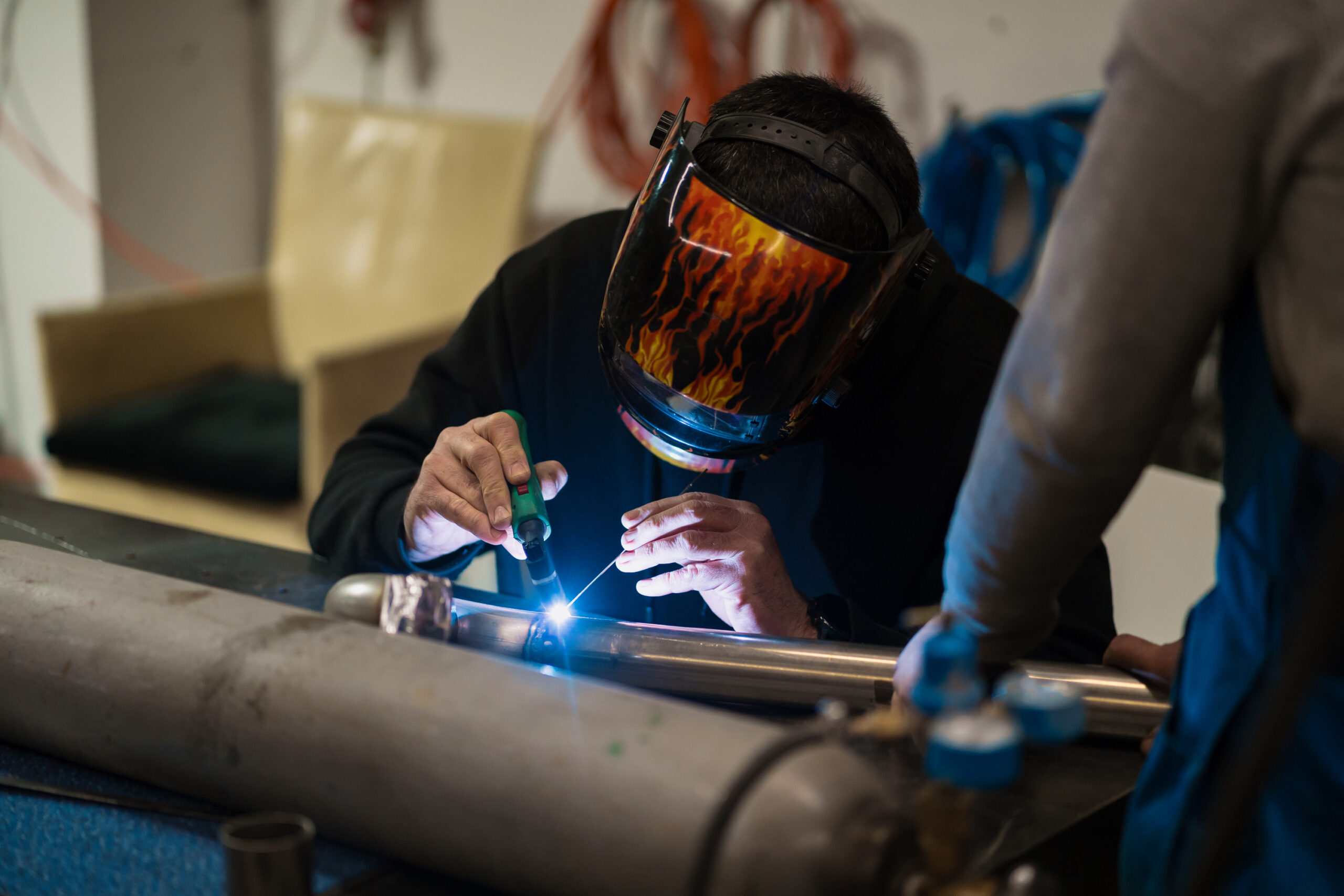
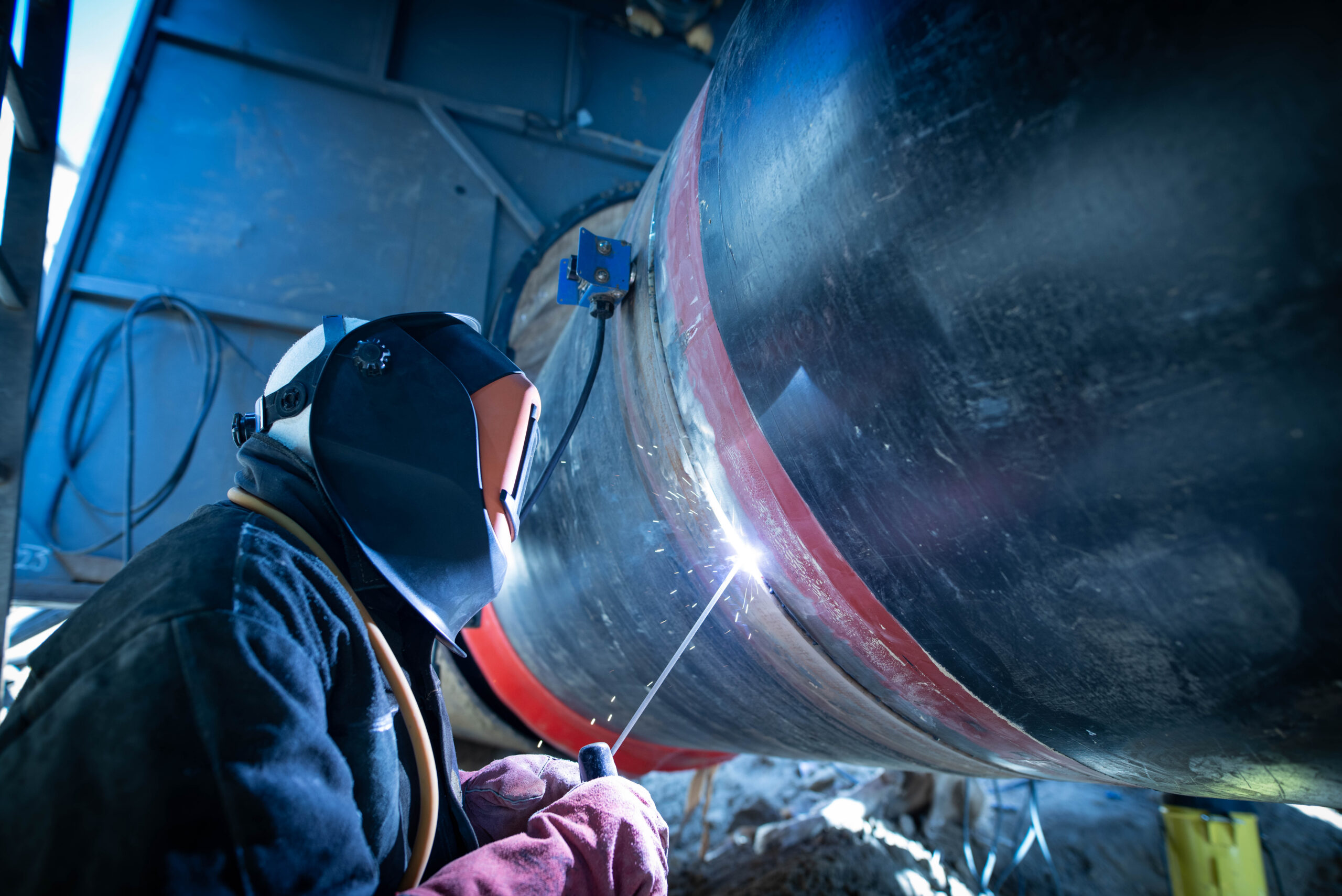
Welding crews move fast. Mainline welding averages several hundred meters per day, but internal coating robots often become the bottleneck. The robot team has to wait for welds to cool, enter each section carefully, blast and clean, coat, and then cure before hydrotesting. This means welding crews often have to pause or skip ahead, causing gaps in workflow and adding risk to tie-ins.
By contrast, FlexSleeve® sleeves are installed before welding. They don’t require robotic equipment, blasting, or post-weld access. The weld zone remains sealed off by built-in bore seals, and the pipe can move directly from welding to testing without delays.
FlexSleeve®: A Proven Alternative to Robotic Internal Coating
FlexSleeve® is Lined Pipe Systems’ patented internal pipe sleeve designed specifically for pipelines with thin internal linings like epoxy, polyamide, and fusion-bonded coatings. Instead of applying an internal coating post-weld, the FlexSleeve® system uses a flexible sleeve installed before welding that permanently seals the weld zone.
How It Works
The FlexSleeve® fits snugly inside the pipe. During welding, the sleeve’s insulation protects the liner ends. After welding, the pipeline pressure activates the built-in bore seals, completely sealing the weld zone from internal fluid contact. FlexSleeves have passed hydrostatic testing up to 4,437 psi even with perforations through the pipe wall.
Project-Proven Results
- Faster construction: FlexSleeve® enables full mainline weld speed without delays for coating
- Better corrosion protection: Physical barrier vs. chemical coating
- Fewer crews: No need for specialized robot operators or epoxy teams
- Lower lifetime cost: Long-term integrity without future repair requirements
The Critical Weak Link
Tie-in welds are particularly vulnerable in pipelines using robotic coating. Once the mainline is coated, robots can’t re-enter the system without damaging the internal lining. Contractors often end up hand-coating or skipping internal protection altogether on tie-ins, creating a corrosion point that will eventually fail.
This is where FlexSleeve® shines. The system is perfect for tie-ins because it installs easily in the field, requires no coating application, and maintains full lining continuity through the weld zone. Major contractors now specify FlexSleeve® exclusively for tie-in welds, even when robots are used elsewhere.
Industry is Catching On
An increasing number of industry experts are voicing concerns about robotic coating. According to a report by Pipeline & Gas Journal, operators are now re-evaluating their internal coating strategies due to challenges with robotics and field application. EPCs are looking for faster, more consistent alternatives that align with standard construction methods.
FlexSleeve® is already gaining traction with forward-thinking owners and engineers who want to eliminate internal corrosion risks without over-complicating construction. As we continue to gather real-world data, the case becomes stronger with every successful project.
Conclusion
Robot-applied internal joint coatings may have seemed like the future of pipeline protection, but on-site realities tell a different story. Delays, inconsistent results, and high costs are pushing the industry toward more practical, scalable solutions.
FlexSleeve® offers an easier, faster, and more reliable method to protect internal weld zones. It matches modern construction pace, reduces risk, and ensures long-term corrosion protection without relying on coating chemistry or robotic execution.
If you’re planning a lined pipeline, don’t let robots slow you down. Contact Lined Pipe Systems to learn how FlexSleeve® can streamline your project and eliminate internal corrosion at the joint permanently.