In pipeline construction, time is never on your side. EPC contractors operate under fixed schedules, contractual milestones, and liquidated damages clauses that make every lost day a financial and reputational risk. When a project involves internally lined pipe, the pressure is even greater, because protecting weld joints from internal corrosion has traditionally meant slower construction, more specialized labor, and unpredictable delays.
Sleeve design has changed that equation. Across oil and gas gathering systems, water transmission mains, and energy transition pipelines, EPC contractors are increasingly specifying internal weld joint sleeves not just for corrosion protection, but because the right sleeve design makes their projects faster, simpler, and easier to control from the first joint to the last.
The Core Problem: Weld Joints Are the Weakest Link
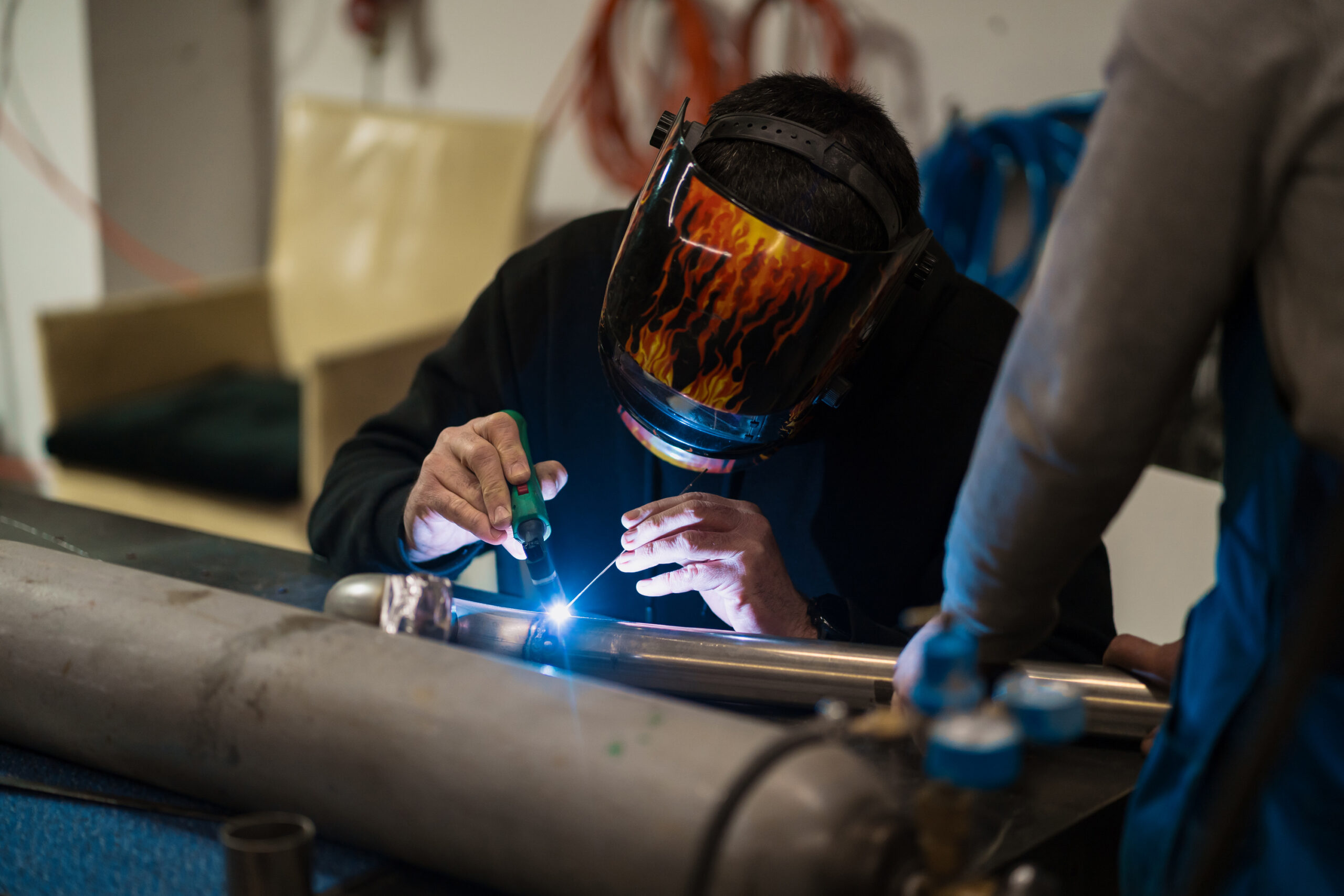
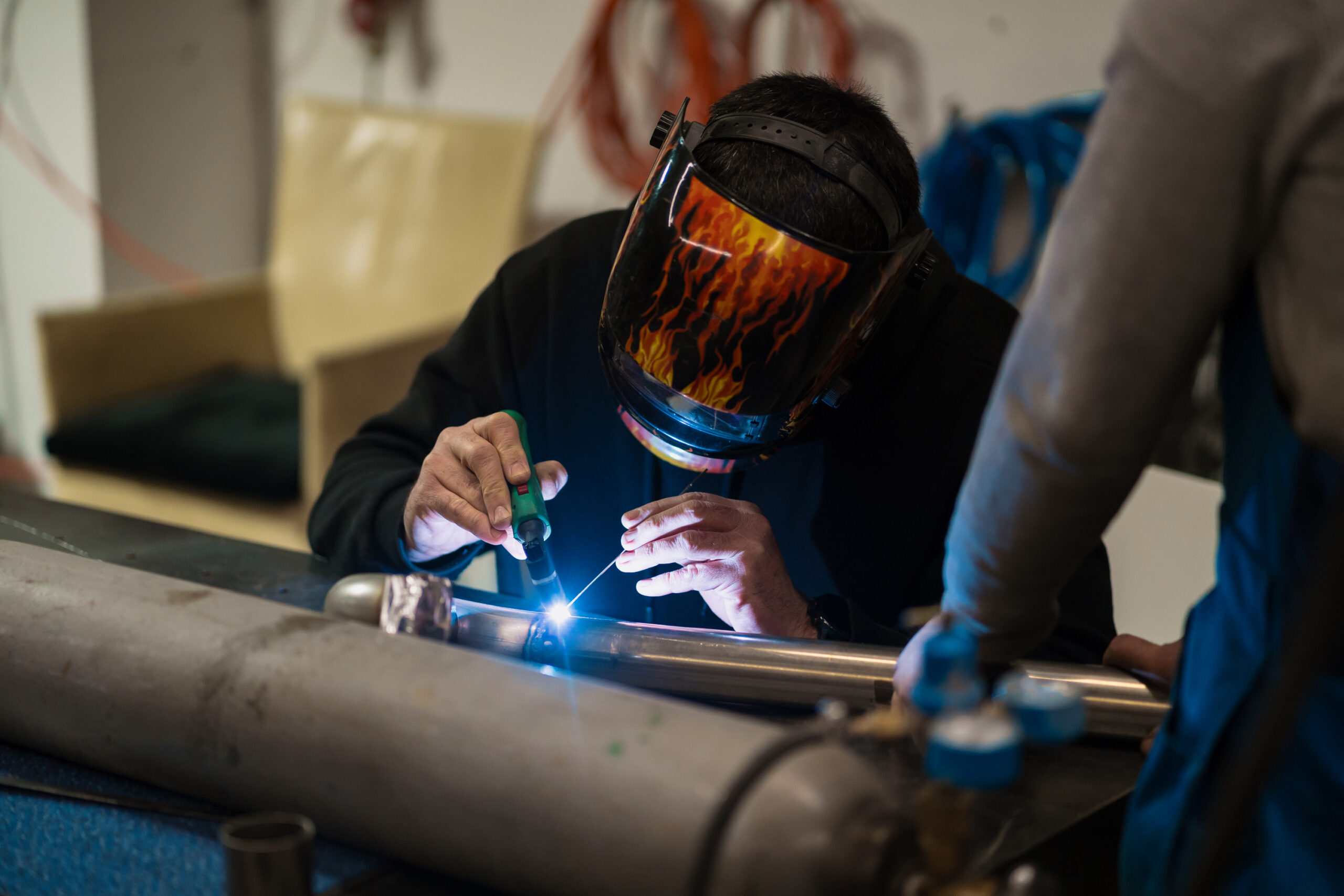
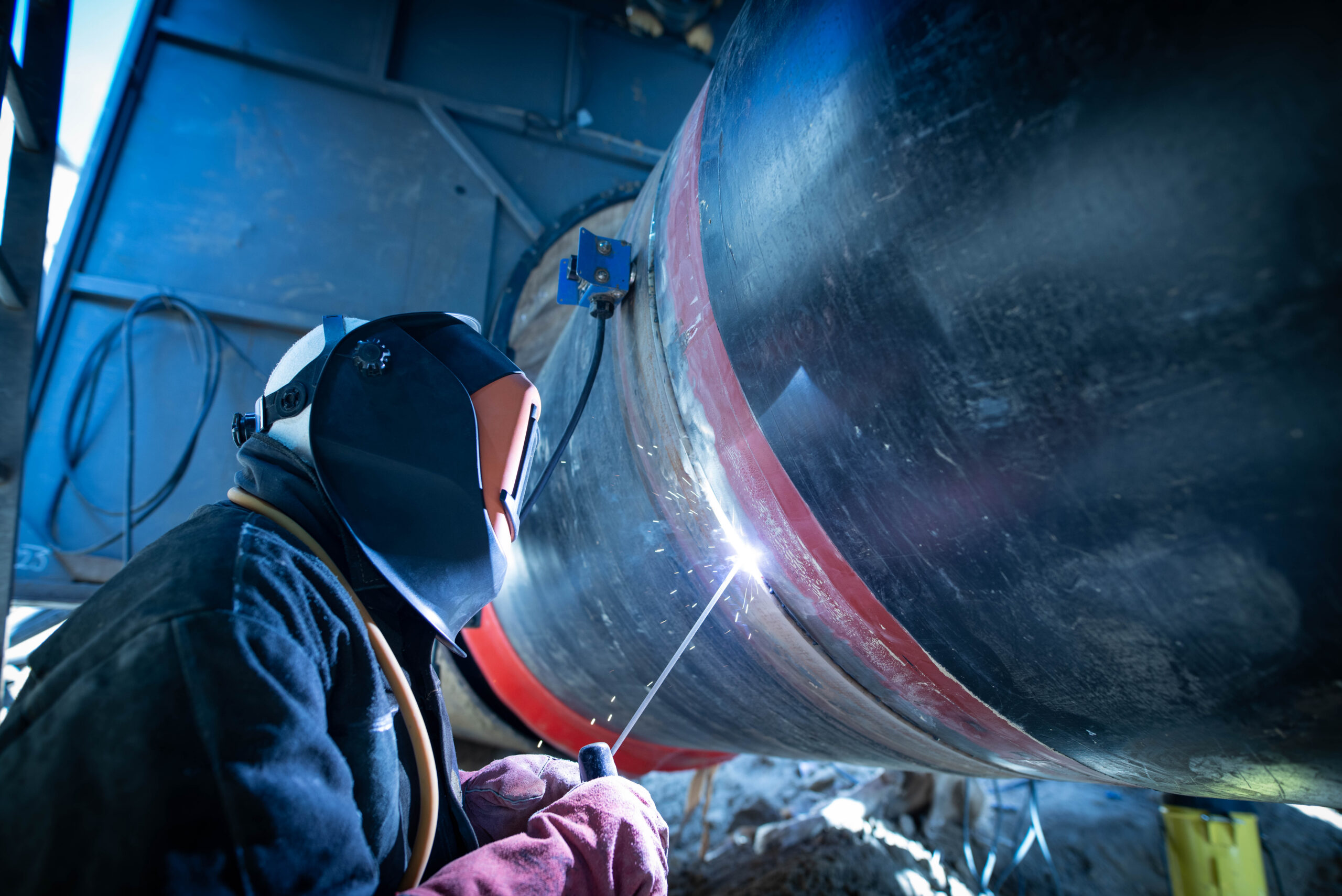
Every internally lined pipeline shares the same fundamental vulnerability at the weld joint. Internal linings — whether epoxy coatings, polyurethane, rubber, or thermoplastic — protect the pipe body from corrosive or abrasive fluids. But during field welding, the heat of the arc destroys that lining at the joint zone, leaving bare steel directly exposed to whatever flows through the line.
Why Robotic Coating Creates Schedule Risk
The traditional answer to this problem was robotic internal spray systems, automated equipment that re-coats the weld zone from inside the pipe after each joint is welded. These systems work in controlled conditions, but they introduce a construction dependency that EPC contractors have learned to dread.
Robotic equipment requires mobilization, calibration, and ongoing maintenance. It must move through the pipe sequentially, meaning the coating queue can fall behind the welding crew. When the robot breaks down, and it does, the entire spread can stop. For a contractor managing a multi-kilometer pipeline on a deadline, this is an unacceptable risk.
How Sleeve Design Eliminates That Risk
Sleeve design eliminates that dependency entirely. The sleeve is installed before welding, not after. The crew inserts the sleeve into the pipe end, aligns the joint, welds normally, and moves on. There is no waiting for robotic equipment, no curing times, no sequential bottleneck. The welding spread and joint protection happen in parallel because the sleeve is already in place when the weld is made.
According to ASME B31.4 and B31.8, pipeline construction systems must maintain joint integrity under operating conditions. Sleeve-based systems satisfy this requirement without disrupting the construction sequence that EPC teams depend on.
How Sleeve Design Speeds Up Pipeline Construction
Removing the Post-Weld Bottleneck
On a large-diameter pipeline project with hundreds or thousands of joints, eliminating the post-weld coating step from the critical path compresses the overall schedule significantly. EPC contractors who have made this switch consistently report faster spread rates and more predictable daily production.
The key is sleeve design quality. A sleeve that is difficult to insert, prone to misalignment, or incompatible with standard lineup clamp procedures will create its own delays. The best sleeve designs are lightweight, flexible, and sized to fit the pipe bore without requiring specialized handling equipment. They work with the construction methods the crew already knows, not against them.
Reducing Hold Points and Inspection Delays
Pipeline construction is governed by inspection hold points, mandatory stops where an independent inspector must verify quality before work continues. With robotic internal coating, the post-weld spray application is typically a hold point. The inspector must verify coating thickness, continuity, and adhesion before the joint is backfilled. If the coating fails inspection, the joint must be redone.
Sleeve-based weld joint protection significantly reduces this exposure. A manufactured sleeve comes with defined dimensions and documented performance characteristics. Its installation is verified through centering confirmation and post-weld pressure testing, both completed quickly with objective results. There is no spray thickness variation, no adhesion uncertainty, and no inspector discretion about whether the coating meets the standard.
Fewer ambiguous hold points means fewer delays, exactly what a time-critical project requires.
Supporting Standard Construction Crews
One of the most underappreciated aspects of sleeve design is how it interacts with the skills of the construction workforce. Pipeline welding crews are highly trained for their core task, but they are not coating specialists. Sleeve-based systems require no specialized training beyond what the sleeve supplier provides during pre-construction orientation.
The installation procedure is straightforward: insert the sleeve, verify centering, weld the joint. This crew compatibility is especially valuable on international projects or remote locations where highly specialized technicians are difficult to mobilize. A sleeve design that standard pipeline crews can install reliably is a sleeve design that directly reduces project execution risk.
Sleeve Design Options for Every Lining System
Not all internally lined pipelines are the same, and effective sleeve design reflects that reality. Selecting the wrong sleeve for the application creates exactly the kind of field problem that time-critical projects cannot afford.
Sleeve Design for ID-Coated and Thin-Lining Pipe
For large-diameter pipelines with internal epoxy or thin coating systems, the sleeve must bridge the uncoated weld zone while maintaining dimensional compatibility with the pipe bore. The FlexSleeve® from Lined Pipe Systems is purpose-designed for this application, lightweight, flexible, and sized for fast insertion by standard pipeline crews without specialized equipment.
For upstream line pipe with thin ID coatings, the CCB® Sleeve offers a proven solution for aggressive produced fluid environments where fluids carry chlorides, CO₂, and H₂S. Its sleeve design addresses the specific dimensional and corrosion challenges of upstream service without adding complexity to the construction sequence.
The FlexSleeve® vs. Robot comparison from LPS provides a detailed breakdown of how sleeve-based installation performs against robotic coating on the same type of project.
Sleeve Design for Rubber, Polyurethane, and Thermoplastic Liners
Pipelines lined with rubber, polyurethane, or thermoplastic systems present a more complex sleeve design challenge. The liner wall thickness is greater, the bore geometry is more constrained, and the sealing requirement is more demanding. The SealSleeve™ for Rubber and PU Linings and the SealSleeve™ for Thermoplastic Liners address these categories directly, using pressure-activated seals that tighten as line pressure increases.
According to AWWA C222, polyurethane lining systems for water pipelines must maintain continuous internal protection. SealSleeve™ systems are designed to meet this requirement at every weld joint without slowing construction.
Sleeve Design for Tie-In Joints
Tie-in joints present their own challenge — welding into an existing system where standard installation procedures may not apply. Joint Lock Rings for Tie-Ins from LPS provide sleeve design specifically engineered for these situations, giving EPC contractors a reliable joint protection solution even at the most difficult points on the pipeline.
Sleeve Design and Regulatory Compliance
Meeting NACE and AMPP Standards
Internal corrosion management is not just a technical decision; it is a compliance requirement. The Association for Materials Protection and Performance (AMPP) publishes guidance on internal corrosion prevention that pipeline operators and their EPC contractors must satisfy. Sleeve-based weld joint protection aligns with this guidance by providing a permanent, verifiable barrier at the joint zone rather than a coating that can vary in thickness or adhesion.
Satisfying API Integrity Requirements
For upstream oil and gas pipelines, API standards govern integrity management requirements that extend to weld joint protection. Sleeve design that provides traceable, documented performance characteristics gives EPC contractors the evidence they need to demonstrate compliance without additional inspection burden.
Documentation That Supports Operator Requirements
Operators increasingly expect detailed quality documentation for weld joint protection systems. Manufactured sleeves come with traceable material certifications, defined installation procedures, and objective quality verification criteria. This gives the EPC contractor’s quality team a clear framework for documentation without relying on subjective field assessments.
The Commercial Case for Sleeve Design on Time-Critical Projects
Schedule Certainty Has a Dollar Value
In EPC contracting, schedule certainty is a commercial asset. A construction approach that delivers predictable daily production, fewer hold points, and no dependency on specialized equipment that can fail in the field is worth paying for, because the alternative costs more in delay claims, liquidated damages, and crew standby time than any premium on the sleeve itself.
Sleeve design that supports fast, parallel construction is not just a technical preference. It is a commercial strategy for managing project risk.
Lower Total Installed Cost
When EPC contractors calculate the total installed cost of weld joint protection, the comparison between robotic coating and sleeve-based systems needs to account for more than the cost of the sleeve itself. Robotic equipment mobilization, technician costs, inspection time, rework when coatings fail, and the schedule impact of sequential construction all contribute to the true cost of the post-weld coating approach.
Sleeve design that integrates with standard construction eliminates most of those cost drivers. The sleeve is the protection system, and it is installed in one step by the crew that is already on site.
How LPS Supports EPC Teams from Design to Installation
Lined Pipe Systems engages with EPC teams during the design and pre-construction phase — not just at the point of supply. LPS engineers help specify the correct sleeve design for the lining system and service environment, develop compatible welding procedures, and train construction supervisors on installation and quality verification before the spread ever begins.
This upstream engagement is how sleeve design translates into actual schedule performance on the job site. The LPS Products General Brochure provides a full overview of the sleeve systems available across lining categories, and the FlexSleeve® Case Studies document how these systems have performed on real projects.
For EPC contractors evaluating sleeve design options for an upcoming project, early engagement with LPS makes the difference between a sleeve that fits the construction plan and one that creates its own complications.
Conclusion
EPC contractors choose sleeve design for time-critical projects because the alternative introduces schedule risk, crew complexity, and inspection uncertainty that a tight project cannot absorb. The right sleeve design removes those risks by integrating joint protection into the standard construction sequence, supporting the welding crew’s workflow rather than creating a competing one behind it.
For operators specifying internally lined pipeline systems and EPC contractors planning their construction approach, sleeve-based weld joint protection is both a corrosion control strategy and a project execution strategy.
Contact the LPS team to discuss sleeve design options for your next pipeline project.