
If you’re looking for the right internal pipe sleeve in 2025, you’re likely dealing with serious decisions around corrosion protection, joint strength, and long-term pipeline reliability. We understand how important these decisions are. Selecting the wrong type of sleeve can increase maintenance costs, reduce operational lifespan, or worse, lead to failure in the field.
This guide was built to help engineers, project managers, and pipeline designers make confident, well-informed decisions about pipeline sleeve selection. By the time you’re done reading, you’ll know exactly what type of sleeve fits your project’s technical, environmental, and commercial needs.
Why Sleeves Matter in Pipeline Integrity
A pipeline sleeve is more than just a component; it’s a defense mechanism. Whether you’re transporting abrasive slurries or aggressive chemicals, the sleeve can be the first and last line of defense against internal corrosion. Our technology is designed to strengthen every weld joint while extending pipeline life.
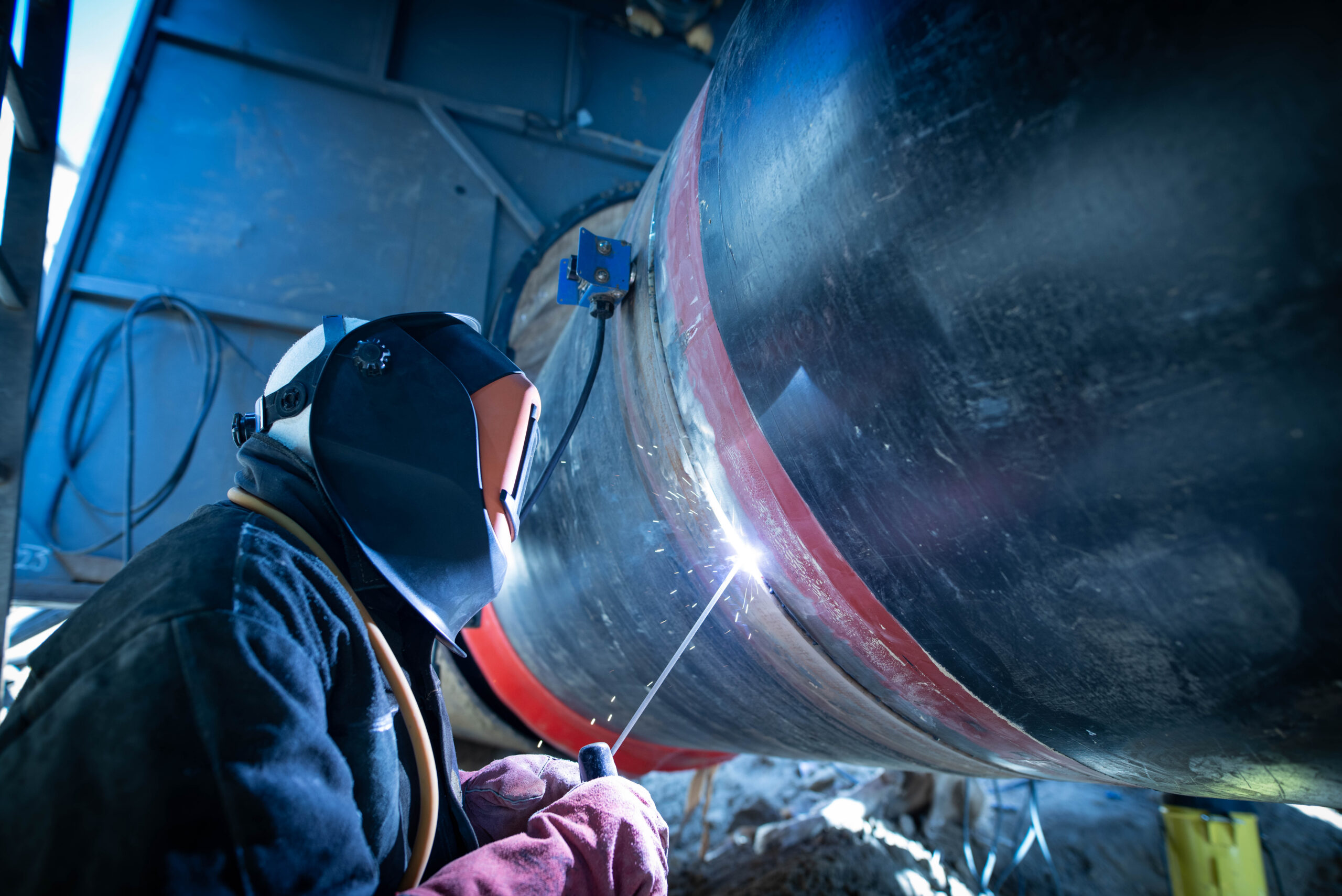
Sleeves play a critical role in joint construction too. The sleeve must accommodate the internal lining, maintain seal integrity, and endure pressures equivalent to that of the pipe wall. Our internal pipe sleeves offer a consistent sealing mechanism and weld-friendly construction to meet these exact needs.
Know Your Pipeline Media Before Selecting a Sleeve
Before jumping into materials or thicknesses, take a step back and assess what’s going through the pipeline. Are you working with slurry, oil, seawater, or chemical-rich process water? Each media requires a unique type of lining and, by extension, a sleeve that protects that lining during and after welding.
For instance, our SealSleeve™ systems are engineered specifically for rubber and polyurethane linings, common in slurry transport. For thermoplastic liners like HDPE, we recommend our SealSleeve™ for Thermoplastics, which provides pressure-rated, leak-free joints ideal for offshore and high-stress installations.
Sizing and Compatibility with Pipe ID
Proper sleeve selection starts with precision. Our systems are custom-built to match your pipe ID, lining thickness, and weld gap tolerances. A sleeve that’s too large may compromise the seal, while one too tight may damage the liner during insertion or welding.
That’s why our FlexSleeve® and CCB® Sleeve systems are designed to flex with the pipe’s shape, ensuring proper insertion and seal quality even in out-of-round pipes. This level of customization significantly reduces installation issues and enhances weld performance.
Sleeve Options and Their Applications
We offer several proprietary sleeve systems based on different project environments and pipe linings. FlexSleeve® is ideal for thin polyurethane or epoxy linings, providing superior sealing, insulation, and weld access. It is compatible with automatic welding and large diameters.
Our CCB® Sleeve, with over 25 years of field history, is still the gold standard for smaller diameters (12″ and below). It offers excellent seal integrity, a long sloped profile for pig passage, and a history of reliable corrosion protection.
Thermoplastic Liner Systems
Thermoplastics like HDPE and polypropylene are often used in highly corrosive environments. The challenge? Achieving a strong, full-penetration weld while maintaining liner continuity through the joint.
Our SealSleeve™ for Thermoplastic Liners creates a locking seat in the host pipe and seals perfectly with the inserted sleeve. This process eliminates liner movement and allows for standard welding without sacrificing liner integrity. It’s the go-to solution for J-lay and S-lay installations offshore.
High-Pressure and Slurry Systems
Slurry and high-pressure pipelines require more than just a standard joint. Mechanical joints are expensive, leak-prone, and often fail under dynamic load. Our SealSleeve™ for Rubber & PU Linings eliminates those issues by offering welded joint strength with polymer lining continuity.
This system makes field bends and tie-ins easier, and most importantly, it reduces construction timelines by eliminating custom flange fabrication or hot bends. It’s reliable, economical, and leak-free.
Corrosion-Resistant Materials for Sleeves
We work with a variety of corrosion-resistant materials depending on the application. For water or chemical pipelines, fusion-bonded epoxy or polyurethane linings provide long-term resistance. Where abrasion is a concern, thermoplastic polyurethane or natural rubber linings ensure durability.
We help select the right internal coating and sleeve combination to match your project’s exposure conditions, ensuring long-term success and cost savings.
Installation Advantages
Our sleeves are engineered for quick installation with minimal risk. Unlike traditional sleeves that require manual alignment and may damage linings, our systems feature precision-matched profiles and bore seals. These self-aligning mechanisms make installation smoother and allow for consistent, repeatable weld quality.
Flexibility and heat resistance are built into the design, especially with our FlexSleeve®, which includes thicker insulation to minimize heat transfer during welding.
When to Choose What
If your project involves larger diameter pipe, automatic welding, or variable wall thicknesses, FlexSleeve® is likely your best fit. It handles high heat and provides easy insertion with automatic lineup clamps.
For smaller diameter pipe (below 12”) where a proven solution is required, the CCB® Sleeve remains the most field-proven internal pipe sleeve available. And for HDPE or thermoplastic liners, our dedicated SealSleeve™ technology provides unmatched sealing under high pressures.
Your Pipeline Deserves Long-Term Protection
The cost of failure in pipeline infrastructure is too high to rely on outdated joint methods. We’ve developed a full suite of internal pipe sleeve technologies to help engineers build stronger, longer-lasting pipelines. Our sleeves are compatible with industry-standard welding practices, tested in the most extreme environments, and trusted in sectors like oil & gas, mining, and water treatment.
Pipeline joint integrity isn’t just a spec, it’s a responsibility. If you’re unsure which sleeve system fits your application, our technical team is here to help.
External Resources to Explore
To support your decision-making, we recommend visiting NACE International for additional guidelines on corrosion protection and pipeline design standards.
For specifications on polyurethane linings, review AWWA C222 Standards for additional context.
Conclusion
When you partner with Lined Pipe Systems, you’re getting more than just a sleeve. You’re getting decades of experience, innovative design, and a team committed to solving internal corrosion challenges the right way.
Need help with your next project? Contact us today and let’s build something that lasts.