Failure investigations on internally lined pipelines tend to converge on the same location. Wall loss appears at a girth weld, within a few inches of the bevel, on a line where the remaining steel is in sound condition.
The reason is straightforward. A pipeline lining protects every section of the bore except the one it cannot physically reach, and closing that gap is the function of a pipe sleeve.
This guide covers what the component does, the materials available, the installation sequence, and the conditions under which a sleeve is not the appropriate solution.
Defining the Component
A pipe sleeve is a cylindrical component fitted to a pipe joint to provide protection, reinforcement, or both. In lined pipeline service it is installed inside the bore, spanning the joint between two pipe ends and restoring the internal barrier across the section affected by welding.
A terminology issue is worth addressing before going further, because it creates genuine problems at specification stage. The term covers two distinct products. External sleeves wrap the outside of the pipe and carry mechanical load. Internal or insert pipe sleeves work from within the bore and address the service fluid.
Both uses are correct, and confusing them has led procurement teams toward the wrong product on more than one project. Where the choice remains open, the distinction between internal sleeves and external coatings reduces to a single question: is the threat external to the pipe, or internal to it?
The remainder of this guide addresses the internal case.
Why the Weld Zone Fails First
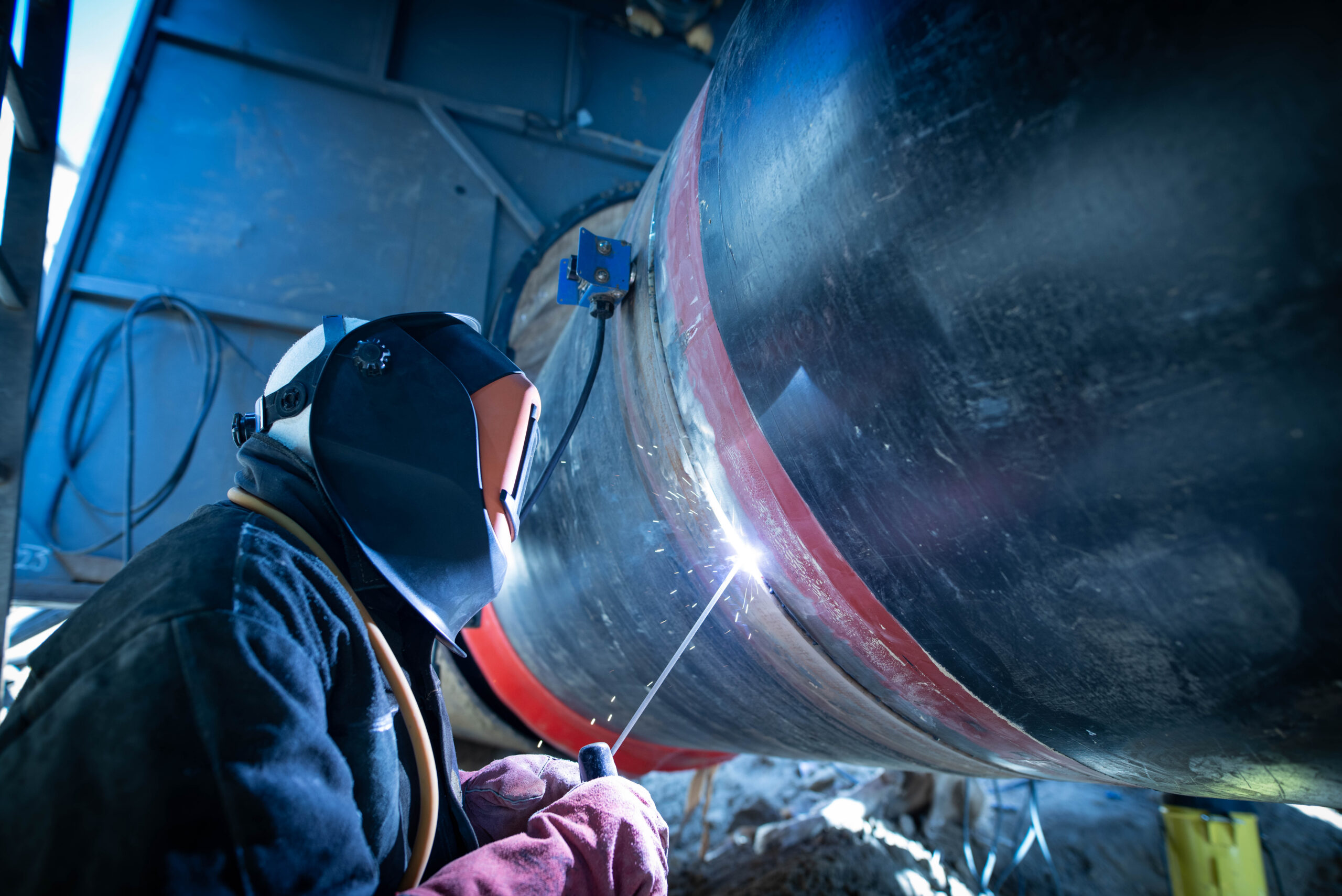
Arc heat is the governing factor. Most internal linings begin to degrade above approximately 400°F, and a girth weld subjects the adjacent steel to several times that temperature. The coating chars, lifts, and burns back on both sides of the joint, typically leaving a ring of exposed carbon steel two to four inches wide.
That exposed ring meets the same service conditions the lining was specified to resist. Produced water, dissolved CO2, and chlorides now contact bare steel with no barrier in place, and corrosion has a concentrated target rather than a uniformly protected surface.
This explains why pipeline corrosion failures cluster at girth welds instead of distributing along the run. Localised wall loss at an unprotected joint can progress substantially faster than general corrosion elsewhere in the line, which is how a pipeline designed for 25 years develops a leak path within the first decade across a few inches of steel repeated at every joint.
The financial consequence follows the same pattern. Excavation, shutdown, and remediation on a buried line rarely appear in the original project estimate, and offshore intervention costs escalate further. The hidden costs of field joint coating failures consistently exceed the cost of protecting the joint at construction.
Pipe Sleeve Materials
No single material suits all applications. Selection follows service fluid, operating temperature, and future access for inspection or repair. Specifying incorrectly reproduces the original failure mode at additional cost.
Carbon Steel
Carbon steel offers the lowest unit cost and the highest mechanical strength, but provides no corrosion resistance in aggressive service. It performs as a sleeve body when carrying a bonded internal coating or liner, not as bare material in contact with produced fluids.
Bare carbon steel products are still marketed for internal applications. Operators should establish the expected condition of that surface over the design life before accepting the specification.
Stainless Steel
Stainless steel resists corrosion without a secondary barrier, tolerates elevated temperature, and performs in chloride-heavy service where carbon steel degrades rapidly. The cost premium is significant and can be difficult to justify on capital cost alone.
The analysis changes where access is constrained. On subsea lines, road crossings, and other locations where intervention is expensive or impractical, the additional upfront cost is small relative to the avoided remediation.
Thermoplastics and Composites
HDPE and comparable materials provide chemical resistance at low weight, which suits water infrastructure, brine service, and slurry transport where abrasion and chemical attack occur together.
The governing constraint is compatibility with the parent lining rather than the material’s intrinsic properties. Where the pipe carries a thermoplastic liner, the sleeve must seal against that liner rather than against steel, and a comparison of thermoplastic liners against other lining methods provides the appropriate starting point.
Coated and Lined Steel
This configuration combines a steel body for structural capability with a bonded internal barrier for chemical resistance. It describes most purpose-engineered insert pipe sleeves and accounts for their performance advantage over single-material alternatives in aggressive service.
Matching Sleeve Type to Lining
| Parent pipe lining | Suitable sleeve | Governing requirement | Typical service |
| Thick internal coating (FBE, epoxy) | FlexSleeve | Flexible seal against a coated bore | Oil, gas, produced water |
| Thin internal lining | CCB Sleeve | Tolerance control on reduced wall thickness | Chemically aggressive service |
| Thermoplastic liner | SealSleeve | Compatible seal against liner material | Water, brine, slurry |
| Existing line, tie-in or repair | Field-installed insert sleeve | Function without re-lining the run | Shutdown and maintenance work |
| Unlined pipe, structural requirement | Steel pipe sleeve | Load transfer only | Casings, penetrations, supports |
The final row is the most frequently misapplied. A structural sleeve does not provide corrosion protection, and specifying steel pipe sleeves against an internal corrosion problem addresses the wrong failure mechanism. The pipeline sleeve selection guide covers configurations beyond those listed above.
Pipe Sleeve Installation Sequence
The sleeve is installed before the weld rather than after it. The operational advantages of the method follow from that sequence.
- Prepare both pipe ends. Clean the bore and confirm the lining is intact up to the bevel.
- Insert the sleeve. Position it within one pipe end so that it spans the joint once the ends are brought together.
- Complete fit-up. Bring the second pipe end over the exposed sleeve length and align.
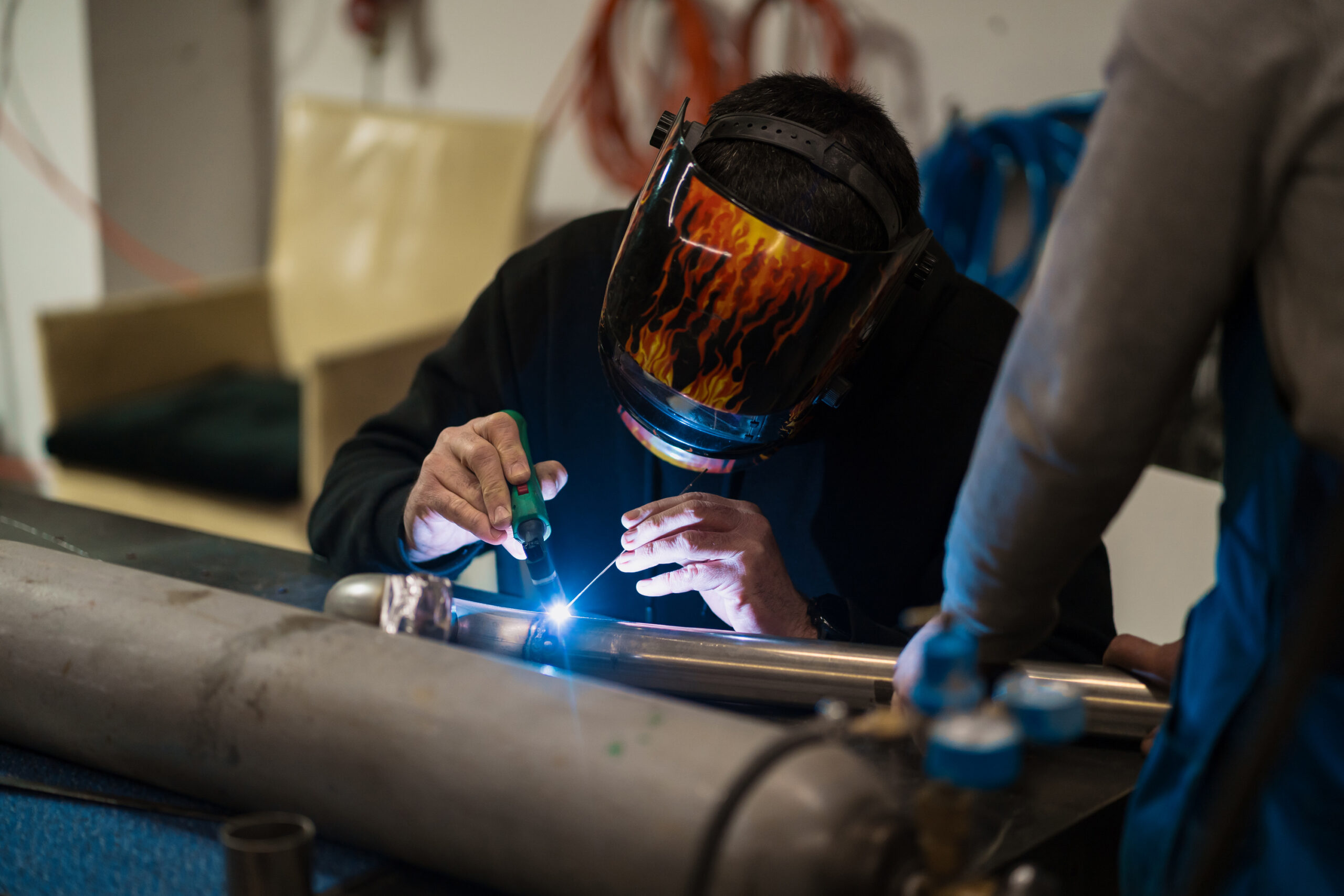
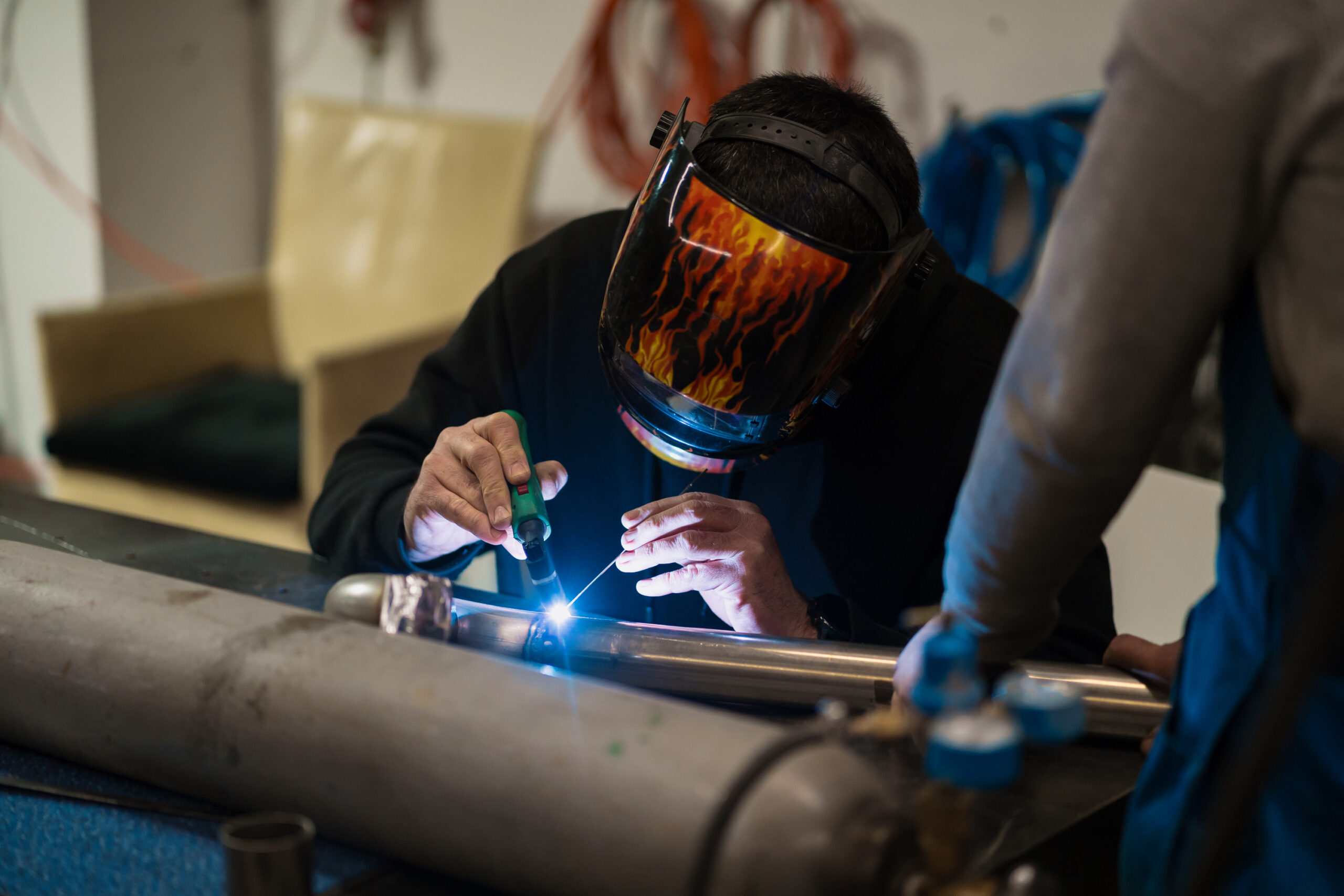
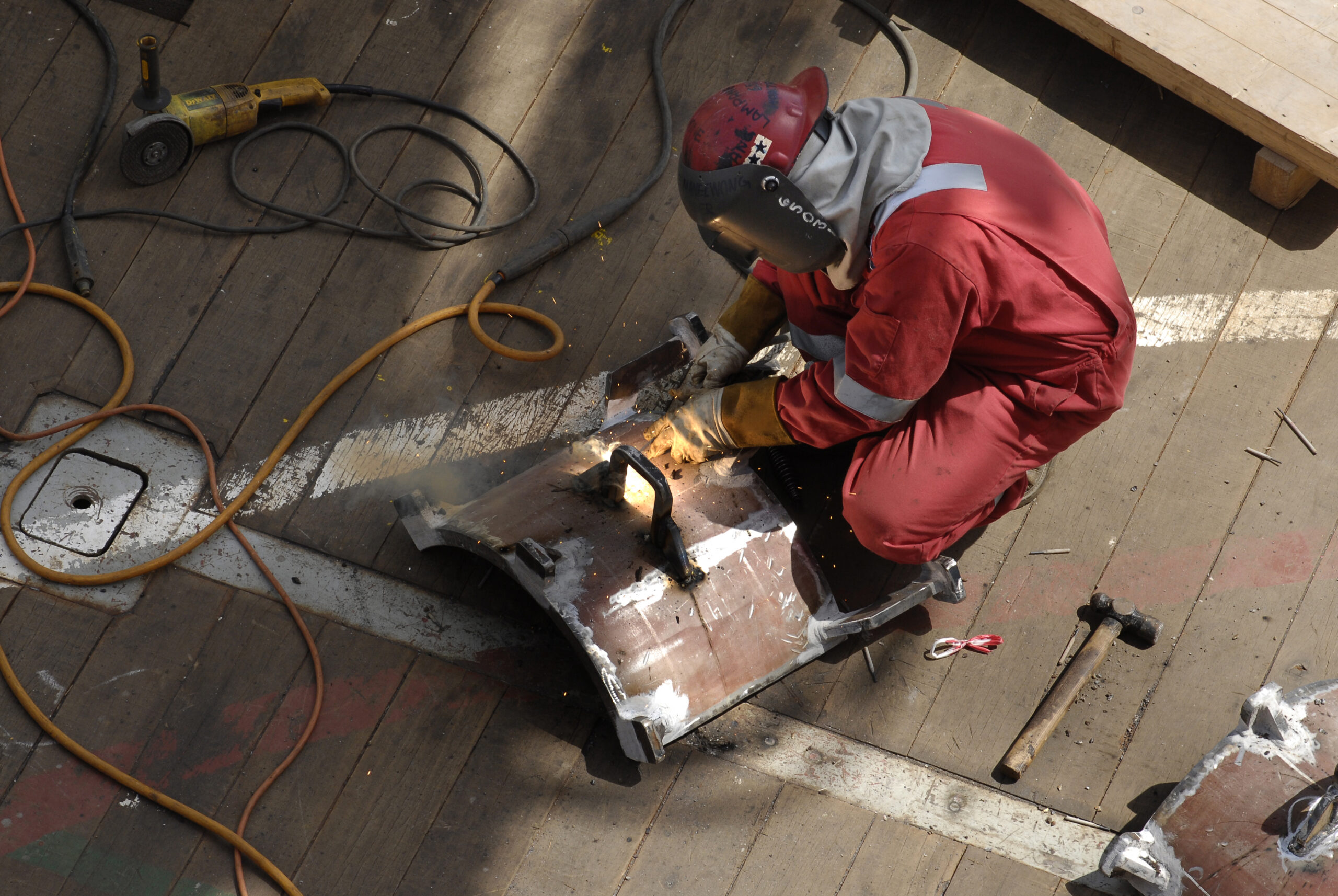
- Weld from the exterior. The sleeve shields the bore while the joint is made.
- Verify. Hydrotest or inspect to project specification before backfill.
The operational benefit lies in what the sequence eliminates. No robotic equipment enters the bore, no coating cure time is required, no separate inspection pass is scheduled, and no crew returns on a subsequent shift. The joint remains on the critical path for minutes rather than hours.
Set against robot-applied internal joint coatings, which require bore access, cure time, and an independent QA cycle, the cumulative schedule difference across several hundred joints frequently drives contractor preference more strongly than the corrosion argument alone.
Diameter constraints widen the gap further. Robotic application becomes impractical below approximately 12 inches, where equipment access and reliable coverage cannot be maintained. A pipe sleeve is not subject to the same limitation and scales upward effectively, as demonstrated on the Morocco desalinated water pipeline, where large-diameter sleeves were installed at production rate.
Principal Applications
Oil and gas gathering and transmission. Produced fluids carry water, CO2, and H2S in varying combinations. Each unprotected weld represents an initiation site, and a single run contains hundreds of them.
Water and wastewater infrastructure. Potable service introduces an additional constraint, as any material in contact with the flow must be suitable for drinking water. The Corpus Christi potable water pipeline adopted sleeve joints on that basis.
Mining and slurry transport. Abrasive solids remove surface protection progressively and attack the weld zone first, where the bore surface is already discontinuous. Products engineered for mining and industrial pipelines address abrasion and corrosion within a single component.
Tie-ins and repairs. Connecting new pipe into an existing line invariably produces a joint that no factory-applied lining covers. This forms the core of resolving tie-in challenges on internally coated pipelines.
Elevated-temperature service. Thermal cycling degrades bonded coatings over time through progressive disbondment. A pipe sleeve rated for high-temperature pipeline service maintains seal integrity through repeated cycles.
When a Sleeve Is Not Appropriate
Identifying the limits of the technology is as useful at specification stage as identifying its applications.
Where the pipe carries no internal lining, an insert pipe sleeve protects a short section of an otherwise unprotected line. This does not constitute integrity management. The appropriate response is to line the pipe or to accept a corrosion allowance and monitor accordingly.
Where the corrosion mechanism is external, an internal pipe sleeve provides no benefit. Soil corrosion, external coating disbondment, and third-party mechanical damage all require external mitigation.
Where existing wall loss has already reduced pipe integrity, protection alone cannot restore lost material. Those cases warrant a full assessment of pipeline repair strategies rather than a sleeve programme.
Verification Before Specification
Three questions should be resolved before the purchase order is issued.
- Material compatibility. Confirm performance against the actual service composition, operating temperature, and pressure, rather than a generic industry profile.
- Supporting test data. Request hydrotest results, adhesion data, and long-term exposure testing. Performance claims without supporting evidence should not be accepted.
- Standards compliance. AMPP publishes the corrosion control framework most operators and EPC contractors specify against. Credible suppliers reference it as a matter of course.
A fourth consideration concerns execution rather than product. A correctly specified component installed poorly performs no better than an incorrectly specified one, which is why proper pipe sleeve installation standards belong in the written procedure rather than in field discretion.
Whole-Life Value
| Unprotected weld zones | Sleeve-protected joints | |
|---|---|---|
| Corrosion initiation | Concentrated at every joint | Eliminated at the joint |
| Inspection burden | Repeat ILI runs and dig programmes | Routine monitoring |
| Unplanned shutdowns | Driven by joint failures | Removed as a failure mode |
| Effective design life | Limited by the weakest joint | Determined by the pipe |
| Remediation | Excavation, repair, lost production | Avoided |
The underlying principle is that a pipeline performs only as well as its weakest section. Protecting the joint shifts design life from joint-limited to pipe-limited, and that shift substantially exceeds the cost of the sleeves.
Regulatory and reporting pressure reinforces the case. Reduced leak frequency and fewer interventions contribute directly to ESG compliance reporting, which increasingly influences project approval alongside capital cost.
Selecting the Correct Pipe Sleeve
Match the product to the lining first, then to the service conditions. Product families exist because linings differ, and a sleeve engineered around a thick coating will not seal reliably against a thin one regardless of manufacturing quality.
FlexSleeve suits pipe with thick internal coatings and performs across large diameters. CCB Sleeve is engineered for thin linings where dimensional tolerances are tight. SealSleeve is designed specifically to seal against thermoplastic liners.
Conclusion
The joint determines how long a lined pipeline remains in service. Pipe grade, lining selection, and external coating can all meet specification, and the line can still fail early because a narrow band of bare steel at each weld carried no protection.
A correctly specified pipe sleeve closes that gap in a single operation, at the point in construction where the cost of closing it is lowest. The intervention occurs before welding rather than after a leak.
Lining type, service conditions, and diameter are sufficient information to determine which product applies. Contact the LPS team for a specification review, including cases where a sleeve is not the correct solution.